1

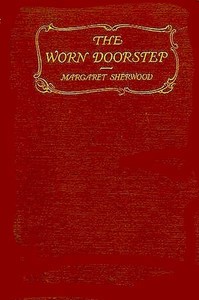
The Worn Doorstep — Story, Setting & Ideas
(0 User reviews)
430
Project Gutenberg
2013
Not confirmed
Diary fiction; Americans -- England -- Fiction; World War, 1914-1918 -- England -- Fiction
Readers of public-domain and historical texts
Project Gutenberg digital edition
en
Edition facts
Words
34,950
Reading time
152 min
Text sections
3
For The Worn Doorstep — Story, Setting & Ideas, the stored edition analysis reports 34,950 words, 2 hr 32 min estimated reading time, and 3 detected text sections.
The text analysis averages about 24.0 words per sentence, while the detected sections provide another way to judge how the source is divided.
Project Gutenberg metadata also associates the work with “Diary fiction,” connecting these edition facts with the source record’s subject description.
Source:
Project Gutenberg record #42797
A diary-novel following an American woman in England who, after her husband departs for the front in 1914, searches for a cottage and navigates village life, class tensions, and the home-front pressures of World War I through precise observations of landscape, labor, and local character.
Read the complete public-domain text at its original source.
Read on Project GutenbergThe narrator’s first entry, dated August 25, 1914, immediately establishes a voice that is both intimate and driven: she writes to her absent husband, describing a quest for a cottage as a physical and psychological necessity. The search is conducted “through the crashes of tragic rumours” and is motivated by a need to “put my back and stand to face these great oncoming troubles.” The prose is unhurried, attentive to sensory detail—yellow harvest fields, green hedgerows, rooks flying homeward—yet the urgency beneath it is palpable. The diary form allows Sherwood to blend external observation with internal pressure, and the opening pages signal that this will be a record of waiting, adaptation, and the quiet reshaping of domestic life under wartime conditions.
A Voice That Addresses an Absence
The diary is addressed to “you”—the narrator’s husband, who has gone to the front. This second-person framing creates an unusual intimacy: the reader overhears a one-sided conversation meant for someone who, the narrator believes, “must know all I am writing before I make the letters.” The device allows Sherwood to convey emotion through restraint. The narrator describes her search for a cottage not as a practical errand but as a way to “carry out our plan to the full” and to avoid the “great strange pain” that comes when she is still. The husband’s absence is the engine of the narrative, yet he never speaks; his presence is felt only through the narrator’s repeated appeals and the plans they once shared. This structural choice gives the novel a taut, elegiac quality from the first page.
Village Life Through a Foreigner’s Eye
The narrator is American, and her perspective filters English village life with a mixture of admiration and bemusement. She notes the “old-fashioned stage or post wagon” and the rooks’ “chattering and gossiping” as markers of a place that feels both timeless and alien. This outsider status allows Sherwood to render familiar English scenes with fresh attention—the grey church tower, the thatched roofs, the “belated blossom” in the hedgerows. But the narrator’s foreignness also creates comic and critical distance, as when she teases Peter the gardener about his socialist principles or remarks on the “European statesmen” with dry irony. The village is not merely a picturesque backdrop; it is a social ecosystem that the narrator must learn to navigate, and her observations carry the weight of someone who is both at home and not at home.
Class, Gender, and the Pressure of War
The excerpts reveal a sharp eye for class and gender dynamics, particularly in the scene with Madge, the gardener’s wife. Madge, having attempted to enlist in men’s clothing, confronts her husband Peter with a withering critique: “I am better than an able-bodied man that doesn’t hoffer himself to his country.” The exchange is comic—Peter calls her “little better than a suffragette”—but it also exposes the war’s disruption of domestic hierarchies. Madge’s actions are motivated by reading “those papers of yours about the French women” fighting, and her rebellion is both personal and political. Sherwood uses the diary form to let these conflicts unfold in dialogue, without authorial commentary, allowing the reader to gauge the narrator’s own position as an American woman observing British working-class life under strain.
Small Details That Carry Weight
Sherwood’s prose is attentive to objects and gestures that accumulate meaning. The worn doorstep of the title is never described directly in the excerpts, but the physical world is rendered with precision: the “broken latch” of the gate, the “burdock root” the narrator tugs, the “Derby hat with holes in it” worn by a tramp-like figure. These details are not merely decorative; they anchor the narrator’s emotional state in tangible things. When she writes that her fingers “tremble and make letters that look like bird-tracks,” the physical act of writing becomes a measure of excitement. The diary form itself is a material practice—ink on paper, dated entries—that gives shape to waiting. Readers should watch for how small, concrete observations—a creaking gate, a dog’s bark, a spade thrust into earth—carry the story’s emotional weight.
The excerpts offer only the opening and middle portions of the diary, so the full arc of the narrator’s story remains unknown. What is clear is that Sherwood uses the diary form to create a voice that is at once personal and observant, turning the search for a cottage into a meditation on absence, belonging, and the strange quiet of a home front. Readers may find it useful to track how the narrator’s tone shifts across entries, and how the recurring motifs—rooks, gardens, gates, letters—gain resonance as the war continues. The novel rewards attention to its small, precise details.
That diary-novel’s quiet noticing of war’s weight in ordinary rooms stayed with me long after. The way small duties and watched hedges carry so much. Your own copy reminded me of that same hush—not about battles, but about what people hold. One Man's View — Reading Companion felt like sitting beside that narrator again, sharing her stillness.
There are no reviews for this eBook.
There are no comments for this eBook.
Reader reflection
How did this book work for you?
Your answers remain private and are stored only in this browser.
Your progress
0
/
10
2
How did the book work for you overall?
3
How likely are you to recommend this book?
4
Did the language feel accessible?
5
Would you read this book again?
6
How valuable was this book for your own interests?
7
Did the book offer a fresh perspective?
8
Which part made the strongest impression?
9
In one sentence, what did you learn?
10