1

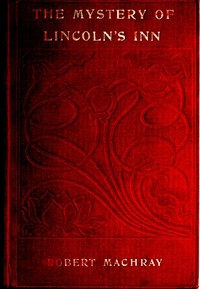
The Mystery of Lincoln's Inn — Background and Themes
(0 User reviews)
396
Project Gutenberg
2012
Not confirmed
Detective and mystery stories; England -- Fiction; Embezzlement -- Fiction
Readers of public-domain and historical texts
Project Gutenberg digital edition
en
Edition facts
Words
90,559
Reading time
394 min
Text sections
8
This digital edition of The Mystery of Lincoln's Inn — Background and Themes is described by source-level measurements including 90,559 words, 6 hr 34 min estimated reading time, and 8 detected text sections.
The text analysis averages about 15.2 words per sentence, while the detected sections provide another way to judge how the source is divided.
Project Gutenberg metadata also associates the work with “Detective and mystery stories,” connecting these edition facts with the source record’s subject description.
Source:
Project Gutenberg record #40464
Robert Machray's 1910 mystery novel uses the enclosed world of Lincoln's Inn and the financial pressure of Beauclerk Mansions to structure a tale of embezzlement and suspicion. The narrative moves between tense office confrontations and property visits, with recurring motifs of letters, deadlines, and hidden knowledge.
Read the complete public-domain text at its original source.
Read on Project GutenbergThe novel opens with a precise temporal marker—half-past ten on a Saturday in July—and immediately establishes the regulated world of Lincoln's Inn. Mr. Cooper Silwood, a solicitor, enters his office to find his head-clerk, Williamson, troubled by a letter from Morris Thornton, who is returning from Vancouver due to serious illness. The exchange is charged with unspoken tension: Silwood's 'curious glittering light in his eyes' and Williamson's 'apprehensive' scrutiny suggest hidden stakes beneath the professional calm. This scene sets a pattern of controlled surfaces giving way to unease.
The Office as Stage
The narrative repeatedly returns to the solicitor's office at 176 New Square, Lincoln's Inn, as a stage for confrontation. The opening chapter's measured dialogue—Silwood's 'calmly' and 'evenly' versus Williamson's 'anxiety'—establishes a rhythm of veiled threat. Later, Francis Eversleigh's room becomes the site of a different power struggle: Harry Bennet's blunt demand for an advance of ten thousand pounds on Beauclerk Mansions. Eversleigh's 'choking gasp' and forced smile contrast with Bennet's 'grin' and 'strange expression'. The office walls contain these escalating pressures, making the setting itself a silent participant.
Letters and Their Weight
Letters function as plot engines and emotional barometers. Thornton's letter from Vancouver, with its 'no precise date' and ominous medical warning, triggers Silwood's 'sinister and menacing' reaction. The head-clerk's careful sorting of correspondence—'opened and sorted out methodically'—implies a system where every document carries potential danger. Later, Bennet's return from Beauclerk Mansions brings a demand for 'an explanation of a circumstance which puzzles me extremely'. The written word, whether a letter or a property report, becomes a tool of revelation and accusation.
Movement Between Spaces
The narrative structure depends on physical movement between distinct locations: the formal office, the unseen Vancouver, and the Kensington property of Beauclerk Mansions. Bennet's journey 'down on the Underground to High Street' to inspect the Mansions bridges these worlds. His return 'at four o'clock' with a 'threatening' expression marks a shift from passive receipt of news to active investigation. The novel's rhythm alternates between static, dialogue-heavy scenes in Lincoln's Inn and these offstage journeys that bring back new information, reshaping the power dynamics.
Recurring Financial Pressures
Money—its absence, its urgency, its mismanagement—runs through the excerpts. Silwood's firm deals with 'important matters' and 'embezzlement' (per the catalog subjects). Bennet insists on selling Beauclerk Mansions outright: 'I do not desire a mortgage... It must be sold outright.' The repeated mention of 'thirty or forty thousand' and 'an advance of ten thousand' grounds the mystery in concrete financial stakes. Eversleigh's 'determination to make as much of a stand as he could' suggests a reckoning tied to ledgers as much as to personal loyalty.
Readers attentive to the novel's structure will note how each scene in Lincoln's Inn is framed by arrivals and departures—letters, visitors, journeys—that carry the plot forward. The excerpts offer no resolution, only mounting pressure. Pay particular attention to what characters choose not to say: the silences, the 'forced smiles', and the 'strange expressions' that hint at knowledge withheld. The mystery lies as much in the gaps between words as in the words themselves.
I finished The Mystery of Lincoln's Inn the other night and found myself remembering the quiet pressure of its letters and deadlines—that ache of knowledge tucked behind closed doors. It reminded me somehow of An American Girl in London — Background and Themes, where new places hold their own hidden weights, and just being somewhere unfamiliar feels like a secret you’re still learning to carry.
There are no reviews for this eBook.
There are no comments for this eBook.
Reader reflection
Record your reading impressions
A brief reflection can help important ideas stay with you longer.
Your progress
0
/
10
2
How did the book work for you overall?
3
Is this a title you would suggest to others?
4
Did the language feel accessible?
5
How distinctive were its ideas or approach?
6
What did you think about the pace?
7
Did any part of the book stay with you emotionally?
8
Would you read this book again?
9
Which lesson or insight stayed with you?
10