1


One Man's View — Reading Companion
(0 User reviews)
1467
Project Gutenberg
2013
Not confirmed
Adultery -- Fiction; Triangles (Interpersonal relations) -- Fiction; Divorced women -- Fiction; Husband and wife -- Fiction
Readers of public-domain and historical texts
Project Gutenberg digital edition
en
Edition facts
Words
41,061
Reading time
179 min
Text sections
4
The source record for One Man's View — Reading Companion measures this digital text at 41,061 words, 2 hr 59 min estimated reading time, and 4 detected text sections.
The text analysis averages about 14.1 words per sentence, while the detected sections provide another way to judge how the source is divided.
Project Gutenberg metadata also associates the work with “Adultery -- Fiction,” connecting these edition facts with the source record’s subject description.
Source:
Project Gutenberg record #43971
An editorial note examining Leonard Merrick's authorial choices in diction, dialogue, and description within 'One Man's View', focusing on the restrained voice of the wronged husband and the period-specific social mores.
Read the complete public-domain text at its original source.
Read on Project GutenbergLeonard Merrick's One Man's View (likely written around 1889, as Granville-Barker's introduction suggests) opens a window onto late-Victorian marital crisis through a notably controlled narrative voice. The excerpt depicting Heriot's revelation to Mrs. Baines reveals a deliberate restraint: Heriot speaks in short, measured sentences—'Your niece has left me'—while Mrs. Baines's dialogue is punctuated with exclamations and colloquialisms like 'Oh, my Gawd!' This contrast in diction underscores a central tension between composure and emotional chaos.
Controlled Diction and Emotional Distance
Heriot's speech is marked by legalistic precision and emotional flatness. When Mrs. Baines gasps, he replies, 'I did my best to make her happy; evidently I didn't succeed.' The adverb 'evidently' introduces a logical detachment, as if he is analyzing a failed contract rather than a marriage. His refusal to 'soften the shock' by outward grief aligns with his profession—he is a lawyer, and his language reflects a mind trained to parse facts. Mrs. Baines, by contrast, uses hyperbole ('heart bleeds for you') and religious framing ('the flesh of your bone in the sight of Gawd'). Merrick thus establishes a polarity: Heriot's clipped, almost clinical responses versus the widow's effusive, colloquial grief. This verbal mismatch heightens the scene's awkwardness and reveals Heriot's internal suppression.
Dialogue as Social Performance
The conversation between Heriot and Mrs. Baines functions as a social ritual where both parties perform expected roles. Mrs. Baines's initial simper—'Dear Mamie is away, the servant tells me'—masks her intrusion, while Heriot's invitation to tea maintains polite form even as he delivers devastating news. Merrick uses dialogue to expose the gap between public decorum and private catastrophe. When Mrs. Baines exclaims, 'Oh, to hear of such a thing!' and later 'Oh, Heaven will punish her,' her exclamations are formulaic, almost theatrical. Heriot's dry response—'I don't know that a faithless wife is much to grieve for after all'—breaks the script, shocking her. The scene's power lies in how Merrick lets dialogue reveal character: Heriot's composure is a mask, Mrs. Baines's piety is reflexive, and their exchange becomes a duel of social expectations.
Period Detail and Setting as Subtext
Granville-Barker's introduction notes that the story 'dates' through references like the Niagara Panorama near Victoria Street and Broadway's 'brightness of Union Square.' These details are not mere decoration; they anchor the emotional drama in a specific historical moment. The mention of Duluth's 'storekeepers spitting on wooden sidewalks' evokes a raw, unfinished America, contrasting with London's established gentility. Merrick uses setting to mirror inner states: the flat where Heriot receives Mrs. Baines is a confined, domestic space that becomes a stage for social rupture. The widow's reference to 'Lavender Street' and the disgrace of neighbors reading about the divorce ties personal shame to a tightly knit community. Setting thus amplifies the stakes—Heriot's composure is not just personal but a defense against public judgment.
Narrative Restraint and the Unspoken
Merrick's prose in this excerpt is notably spare. He avoids interior monologue or authorial commentary, letting dialogue and gesture carry the weight. Heriot 'laughed drearily' and 'bowed'—small actions that speak louder than any outburst. The narrative withholds Heriot's inner turmoil, forcing the reader to infer it from his controlled exterior. When Mrs. Baines accuses him of being 'harder than I thought,' the reader may wonder if she is right or if his calm is a fragile shell. This restraint is a deliberate authorial choice: by not explaining Heriot's feelings, Merrick invites the reader to judge the gap between word and emotion. The scene ends with Heriot rising to cut off discussion, leaving the widow—and the reader—with an unresolved tension that propels the story forward.
Readers attentive to Merrick's craft will notice how he uses the friction between what is said and what is withheld. Heriot's composure is not stoicism but a performance of control that may crack later. The period details—from the Panorama to the wooden sidewalks—are not nostalgic but functional, grounding the characters in a world where divorce carried social death. This edition, introduced by Harley Granville-Barker, offers a chance to observe a novelist working with subtle tools: precise diction, revealing dialogue, and a narrative voice that trusts the reader to read between the lines.
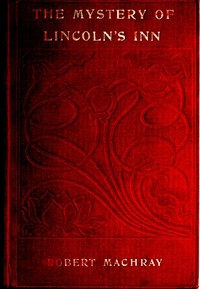
That old restraint in One Man's View—a husband’s quiet grief in the spaces between words—always recalls another shelf where justice itself held its tongue. The Mystery of Lincoln's Inn — Background and Themes carries that same hush, law’s slow corridors echoing a personal ache. Some books simply keep company that way.
There are no reviews for this eBook.
There are no comments for this eBook.
Reader reflection
Before you leave, reflect on the book
Use these questions to collect your thoughts before moving on.
Your progress
0
/
10
2
How much did you enjoy the reading experience?
3
Would you encourage someone else to read it?
4
How demanding did the text feel?
5
Would you like to discuss this book with someone?
6
How much did the book move you?
7
How would you describe its reading pace?
8
Was the book easy to understand?
9
What did this book teach you most?
10