1

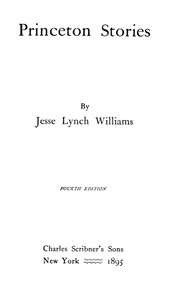
Princeton Stories — Reading Companion
(0 User reviews)
1121
Project Gutenberg
2013
Not confirmed
College stories, American; Princeton University -- Fiction; Princeton (N.J.) -- Social life and customs -- Fiction
Readers of public-domain and historical texts
Project Gutenberg digital edition
en
Edition facts
Words
68,568
Reading time
299 min
Text sections
6
This digital edition of Princeton Stories — Reading Companion is described by source-level measurements including 68,568 words, 4 hr 59 min estimated reading time, and 6 detected text sections.
The text analysis averages about 17.1 words per sentence, while the detected sections provide another way to judge how the source is divided.
Project Gutenberg metadata also associates the work with “College stories, American,” connecting these edition facts with the source record’s subject description.
Source:
Project Gutenberg record #43587
In these linked stories of 1890s Princeton, Jesse Lynch Williams contrasts the rough, secretive cane sprees of the past with the sanitized modern field events, and follows students like Lawrence, Thompson, and the scrub quarter-back Wormsey through rivalries, hazing, and the pressures of college life.
Read the complete public-domain text at its original source.
Read on Project GutenbergJesse Lynch Williams opens Princeton Stories by drawing a sharp contrast between the old and new versions of the Cane Spree: the modern event is held in broad daylight on University Field, advertised on posters, and watched from bleachers with girls present, while the earlier version took place at midnight on wet grass, with a full moon and a fierce rush following each bout. This tension between a romanticized, rough-and-tumble past and a more regulated, respectable present runs through the collection. Williams repeatedly signals that things have changed—"We are a university now"—yet the stories themselves dwell on the older, more chaotic traditions, suggesting a nostalgia for the very practices the narrator claims are obsolete.
Nostalgia and the Changing Campus
The opening story, "The Winning of the Cane," establishes a pattern of looking backward. The narrator directly addresses the reader: "This is to be a story of 'How we used to do when we were in college.'" The cane spree is described as something a fellow lived for, an honor comparable to playing on the 'Varsity or winning the Lynde debate. Yet the narrator also notes that reviving the ancient spree would not do—it was bad for football training hours. This ambivalence appears throughout: the stories celebrate the old ways while acknowledging their incompatibility with the new university ideal. In "The Hazing of Valliant" and "Fixing that Freshman," the rituals of class rivalry are portrayed as both cruel and exhilarating, with characters like Thompson and Darnell manipulating each other through a game of one-upmanship that feels both trivial and deeply serious.
The Scrub Quarter-Back: Body and Will
In "The Scrub Quarter-Back," Williams focuses on Tommy Wormsey, a meek, ugly boy who weighs 137 pounds stripped and is covered in court-plaster. The crowd laughs at his appearance—his torn suit, mismatched stockings, and sorrowful face—but they also recognize his football instinct. Williams emphasizes the gap between Wormsey's external meekness and his internal drive: he is a coward at heart, yet he dives at two-hundred-pound guards and yells signals in a shrill earnest voice. At night, he practices alone, stacking pillows and cushions in a corner and punishing himself when he misses the black one in the centre. This portrait of a character who is both absurd and admirable, who says "Yes, sir" to coaches and sniffls back to his place, reveals Williams's interest in the contradictions of college masculinity—where physical courage coexists with deep insecurity.
Rivalry and Manipulation in Student Life
Several stories explore the dynamics of influence and control among students. In the excerpt from "The Responsibility of Lawrence," two characters—Thompson and Darnell—each confide in Lawrence about the other, each believing they are manipulating the other's behavior. Thompson claims he is keeping Darnell from making a fool of himself by poling (studying) late into the night; Darnell claims he is managing Thompson's jealousy by the same tactic. Lawrence's dry response—"Yes, lots of people are"—underscores the irony. Williams presents these rivalries as a kind of social game, where each player thinks they are the one in control. The stories do not resolve who is right; instead, they leave the reader with a sense of the intricate, often petty, but absorbing social world of the college, where reputation and influence are constantly negotiated.
Readers approaching Princeton Stories should attend to the way Williams uses the frame of nostalgia to critique and celebrate college life simultaneously. The stories are not simply period pieces; they are self-conscious about the act of remembering. The narrator's voice—sometimes wistful, sometimes ironic—invites the reader to question how much has really changed. Pay attention to the recurring motifs of physical appearance, ritualized violence, and the gap between public performance and private feeling. These elements give the collection a coherence that transcends its episodic structure.
Those old cane sprees in Princeton Stories remind me how boys guard their rituals, their secret bruises. I think of that same quiet fierceness in Guy Deverell, v. 1 of 2 — Reading Notes, where honour hides behind a gentleman’s calm. Different decades, same longing to be understood without words. It is a gentle thing, watching them both keep faith.
There are no reviews for this eBook.
There are no comments for this eBook.
Reader reflection
Take a moment to reflect on this book
Create a short personal record of your experience with this book.
Your progress
0
/
10
2
How much did you enjoy the reading experience?
3
Would you encourage someone else to read it?
4
Did the language feel accessible?
5
How strongly did the book affect you emotionally?
6
How valuable was this book for your own interests?
7
How clearly were the main ideas presented?
8
Which part made the strongest impression?
9
Which lesson or insight stayed with you?
10