1

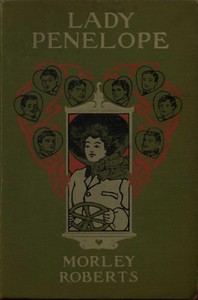
Lady Penelope — Context and Discussion
(0 User reviews)
855
Project Gutenberg
2014
Not confirmed
Young women -- Fiction; Mate selection -- Fiction; England -- Social life and customs -- 20th century -- Fiction
Readers of public-domain and historical texts
Project Gutenberg digital edition
en
Edition facts
Words
80,651
Reading time
351 min
Text sections
12
The catalog record for Lady Penelope — Context and Discussion provides practical reading context through 80,651 words, 5 hr 51 min estimated reading time, and 12 detected text sections.
The text analysis averages about 11.5 words per sentence, while the detected sections provide another way to judge how the source is divided.
Project Gutenberg metadata also associates the work with “Young women -- Fiction,” connecting these edition facts with the source record’s subject description.
Source:
Project Gutenberg record #45648
Morley Roberts's 1904 novel introduces Lady Penelope Brading, a beautiful, humorless reformer who sets out to improve men. The excerpts reveal a satirical voice, a chase to Spilsborough, and a comedic duel, guiding readers through a social comedy of manners.
Read the complete public-domain text at its original source.
Read on Project GutenbergLady Penelope Brading, at twenty-one, announces her life devoted to reform, aiming to make society 'good and useful and straightforward.' The narrator’s tone is wryly hyperbolic: Penelope believes in 'clergymen, in politicians, in the Deceased Wife's Sister,' and even 'the London County Council.' Her beauty is described through a cascade of painterly comparisons—Titian, Correggio, Reynolds—yet she 'had no sense of humour whatsoever.' This opening establishes a satirical lens, inviting readers to watch a serious-minded heroine navigate a world of suitors.
The excerpts later shift to a farcical chase: multiple men race to Spilsborough, hiring motor-cars and ending up in ditches. The narrative voice remains playful, with characters like Bob pulling out 'a handful of sovereigns' and declaring he'll pay fines. The tone suggests a comedy of errors rather than high drama.
A Heroine Built from Contradictions
The opening chapter presents Penelope as a catalogue of earnest beliefs and physical perfection. She is 'opposed to war' yet admires 'the leader of the opposition'; she subscribes to a society for a national theatre and also to a hospital. The narrator lists her credulities with deadpan precision: 'She believed in clergymen, in politicians, in the Deceased Wife's Sister, in all eminent physicians, in the London County Council.' This accumulation creates a character who is both absurd and formidable.
Her lack of humor is emphasized as 'utterly delightful,' a paradox that signals the novel’s ironic stance. Readers should note how this trait plays out: Penelope’s seriousness may either be punctured by events or remain unshakeable. The excerpts do not reveal whether she ever laughs, but the narrator’s tone suggests she is a target of gentle mockery.
The Rush to Spilsborough: Farce in Motion
In the middle excerpt, the narrative accelerates into a comic chase. Bob, upon discovering that multiple suitors have vanished to Spilsborough, hires a motor-car and speeds off, passing 'a motor-car in the ditch' without stopping. The detail that Bramber and his chauffeur are 'sitting upon the wreck, using very awful language' grounds the farce in physical comedy.
The men converge on the cathedral city: Gordon, Plant, Goby, De Vere, and Rivaulx all appear. Bob finds them 'all in bed but Plant,' who has gone to see the cathedral by moonlight. The scene sets up a confrontation, with Rivaulx threatening to kill Plant instead of Bramber. The dialogue is staccato and theatrical: 'You are a scoundrrrel,' rolls Rivaulx; Plant replies, 'Oh, dry up!' This section promises a duel or a brawl, but the excerpts cut off before resolution.
The Narrator’s Wry Distance
Throughout the excerpts, the narrator maintains a detached, amused voice. Descriptions are laced with understatement: Penelope’s beauty is such that 'major and minor poets agreed about it; artists desired to paint her and failed.' The aside about poets and artists is a knowing nod to literary conventions. Similarly, when Bob hires a motor-car, the narrator notes he 'pulled out a handful of sovereigns' and says, 'Take as many as you think fair.'
The narrator also offers dry observations about human nature: 'It is astonishing how an accident at thirty miles an hour brings owners and mechanics down to the same human level.' This comment, slipped into the chase, reveals a comic sensibility that values deflation over heroics. Readers should watch for such asides, as they shape the novel’s tone more than the plot itself.
Clues from the Cast of Suitors
The list of illustrations names eight male characters, each with a tag: Captain Plantagenet Goby, V.C., 'who was ordered to read poetry'; Leopold Norfolk Gordon, 'some said his real name was Isaac Levi'; Austin De Vere, who 'wrote poetry, and abhorred bulldogs and motor-cars.' These tags hint at a satirical typology of suitors—the soldier, the possibly Jewish financier, the aesthete.
The excerpts show these men in action: Gordon, Plant, and Rivaulx all race to Spilsborough, and Rivaulx is described as an 'Anti-Semite to his manicured finger-tips.' The narrator does not dwell on this, but it suggests social commentary woven into the comedy. Readers may track how each suitor’s defining trait is tested or parodied. The chase itself reduces them to figures of fun, their grand passions deflated by motor accidents and missed connections.
The excerpts offer a coherent sample of the novel’s satirical voice and comic structure. Readers should approach Lady Penelope as a social comedy where the heroine’s earnestness collides with the absurdity of her admirers. Pay attention to the narrator’s ironic asides and the way physical farce undercuts romantic expectations. The incomplete chase and duel suggest that the novel’s pleasures lie less in resolution than in the witty detours along the way.
Reading about Lady Penelope’s earnest crusade, I remembered sitting in my grandmother’s armchair, half-lost in a similar tug-of-war between idealism and laughter. That same quiet ache surfaced with Princeton Stories — Reading Companion, where young men stumble through their own seriousness. Both books feel like old friends, gently reminding me how we outgrow our own solemnity without quite losing it.
There are no reviews for this eBook.
There are no comments for this eBook.
Reader reflection
Before you leave, reflect on the book
Use these questions to collect your thoughts before moving on.
Your progress
0
/
10
2
How much did you enjoy the reading experience?
3
Would you encourage someone else to read it?
4
How easy was the book to follow?
5
How did the reading compare with what you expected?
6
What did you think about the pace?
7
How strongly did the book affect you emotionally?
8
Did anything about the book feel genuinely new?
9
What changed or sharpened your thinking?
10