1

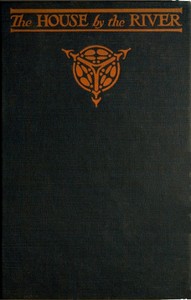
The House by the River — Text and Context
(0 User reviews)
2304
Project Gutenberg
2013
Not confirmed
Murder -- Fiction; Poets -- Fiction; London (England) -- Social life and customs -- 20th century -- Fiction
Readers of public-domain and historical texts
Project Gutenberg digital edition
en
Edition facts
Words
68,015
Reading time
296 min
Text sections
6
Before opening The House by the River — Text and Context, the edition data offers a quick orientation: 68,015 words, 4 hr 56 min estimated reading time, and 6 detected text sections.
The text analysis averages about 16.9 words per sentence, while the detected sections provide another way to judge how the source is divided.
Project Gutenberg metadata also associates the work with “Murder -- Fiction,” connecting these edition facts with the source record’s subject description.
Source:
Project Gutenberg record #41791
A. P. Herbert's 1921 novel uses precise social observation and ironic narration to examine a poet's moral self-justification after a death in his household, set in a close-knit Thames-side London community.
Read the complete public-domain text at its original source.
Read on Project GutenbergThe novel opens with a detailed, almost anthropological description of Hammerton Chase, a London enclave where neighbours know each other's domestic crises and borrow wine-glasses and anchors. The narrator's tone is wry and detached, noting that in 'heartless Kensington' such intimacy is unknown. This setting is not mere backdrop; it establishes a community whose watchful sociability will later press on the protagonist's conscience.
The poet Stephen Byrne is introduced through his creative cycles: when writing goes well, the world seems benevolent; when barren, he becomes moody and irritable. Herbert traces this psychological pattern with clinical precision, linking Byrne's artistic temperament to his moral reasoning after a traumatic event.
The Narrator's Ironic Gaze
Herbert's narrator adopts a tone of urbane irony that colours every description. Of the Whittakers' Wednesday At Homes, he remarks that 'no one else in Hammerton Chase was officially At Home at any time. So every one went to the Whittakers'.' The phrasing implies a gentle mockery of social conventions. The narrator also steps back to generalise about writers: 'This is the way of many writers. Their muses and their moods react upon each other in a kind of unending circle.' These asides create a knowing distance between reader and events, inviting us to judge Byrne's self-deceptions.
The irony sharpens when the narrator imagines the newspaper obituaries that would follow a poet's death: 'Tragic death of a young poet still in his prime ... Keats ... unquestionable stamp of genius.' Byrne then reflects that this would be true, and that his own survival is therefore justified. The narrator does not comment directly, but the juxtaposition of cliché and self-serving logic is damning.
Diction of Self-Justification
Byrne's internal monologue reveals a mind adept at rationalisation. After the policeman's visit restores his 'tranquillity,' he concludes that 'no good purpose would be served by telling the world the truth about Emily Gaunt and about John Egerton.' The word 'truth' is placed in a context of convenience. Herbert renders Byrne's thoughts in a register that blends lofty artistic ambition with mundane self-interest: 'It made him sure that he was right—sure that his decisions were wise.'
The poem he works on is described as 'a kind of epic, an immensely daring, ambitious affair' that is 'a great song of the chivalry and cour...' (the excerpt breaks off). The unfinished sentence mirrors the incompleteness of Byrne's moral project. His creative excitement is rendered in physical terms: 'he talked like a small boy at dinner-time.' This deflates his pretensions while making him recognisably human.
Structure and the Unfinished Poem
The narrative is punctuated by Byrne's creative process. Herbert devotes several paragraphs to the 'unending circle' of writerly moods: depression after finishing a work, elation during composition. This cyclical structure mirrors the plot's moral oscillations. Byrne's decision to conceal the truth is explicitly tied to his current productivity: 'Nothing could be harmful or disturbing while he was doing such good work every day.'
The poem itself remains a fragment in the excerpts—we learn its subject (the war, chivalry) but not its completion. This structural gap may reflect the novel's own concerns with unfinished stories and suppressed evidence. The reader is left to infer how Byrne's artistic output relates to his actions, a connection Herbert leaves tantalisingly open.
Setting as Moral Pressure
Hammerton Chase is described with a specificity that makes it almost a character. It is 'like neither street, nor road, nor avenue, nor garden' but has 'something of an old village and something of a Cathedral Close, something of Venice and something of the sea.' This hybrid quality isolates its residents from the anonymity of London. The community 'clung almost pathetically together in their little oasis of civilization,' suggesting a fragility that Byrne's secret will test.
The river itself is present but understated in the excerpts—the Island opposite is 'a long triangle of young willows, the haunt of wild duck and heron and swan.' This pastoral detail contrasts with the urban crime that disrupts the Chase. Herbert uses the setting to create a pressure cooker: a place where everyone knows everyone, and where a poet's reputation can be both made and unmasked.
Readers attentive to Herbert's narrative voice will find a novel that operates through implication rather than explicit judgment. The excerpts offer a portrait of a man who uses his art to justify his actions, but the full moral calculus depends on how the story resolves. Pay close attention to the moments when the narrator steps back from Byrne's perspective—those ironic asides are where the novel's true commentary resides.
That rainy afternoon, I kept returning to the way Herbert’s poet twisted every kindness into evidence of his own virtue. The fog outside seemed to thicken with his self-deception. Later, drying my glasses, I noticed the same quiet moral slippage in another author’s portrait of a man convinced by his own charm, so I pried open Master of Men — Themes and Context. It felt less like a finding than a natural drift.
There are no reviews for this eBook.
There are no comments for this eBook.
Reader reflection
Your personal reading reflection
Build a private reading journal entry for this title.
Your progress
0
/
10
2
How did the book work for you overall?
3
Is this a title you would suggest to others?
4
What was the reading difficulty like?
5
Was the book easy to understand?
6
Did the book give you something worth debating?
7
Is this a title worth rereading?
8
Did this book create an emotional response?
9
Which lesson or insight stayed with you?
10