1

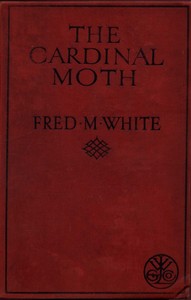
The Cardinal Moth — Key Ideas to Explore
(0 User reviews)
200
Project Gutenberg
2013
Not confirmed
England -- Fiction; Love stories; Mystery fiction
Readers of public-domain and historical texts
Project Gutenberg digital edition
en
Edition facts
Words
69,722
Reading time
304 min
Text sections
9
Before opening The Cardinal Moth — Key Ideas to Explore, the edition data offers a quick orientation: 69,722 words, 5 hr 4 min estimated reading time, and 9 detected text sections.
The text analysis averages about 12.6 words per sentence, while the detected sections provide another way to judge how the source is divided.
Project Gutenberg metadata also associates the work with “England -- Fiction,” connecting these edition facts with the source record’s subject description.
Source:
Project Gutenberg record #43674
In Fred M. White's 1905 mystery, Sir Clement Frobisher's orchid-house, costing over £100,000, sets a stage of opulent deception. Disguises, a threatened Shan throne, and a lady of the rubies entangle Harold and Angela in a plot against the cynical host.
Read the complete public-domain text at its original source.
Read on Project GutenbergThe novel opens with a striking description of Sir Clement Frobisher's orchid-house, a "vast dome" filled with "thousands upon thousands" of blossoms, where the host sits smoking a clay pipe and drinking thin Rhine wine. This juxtaposition of extravagant beauty and coarse taste immediately establishes Frobisher as a man of contradictions: he claims to hold his floral folly "cheap at the money" yet warns that picking a single orchid would provoke his wrath. The conservatory becomes a stage for disguise and intrigue, as Harold adopts a false identity to infiltrate Frobisher's home, aided by Angela. The narrative voice shifts between lavish sensory detail and terse dialogue, creating a tension between the exotic setting and the characters' calculated schemes.
Contrasts in Character and Setting
The excerpts reveal a deliberate pattern of contrasts. Frobisher's orchid-house is described as having a "diabolical suggestiveness" that orchids alone possess, blending beauty with menace. Inside, the atmosphere is "misty silence and the coaxed and pampered atmosphere of the Orient," while outside, the "throaty roar of Piccadilly" intrudes. This clash between the artificial paradise and the mundane city mirrors Frobisher himself: a man who tolerates robbery and lies but not the theft of a flower. His preference for "atrocious grape juice and common ship's tobacco" further underscores his perverse tastes. Similarly, Angela is portrayed as eager to help Harold, insisting she is "a great deal stronger and braver" than he imagines, yet she is tasked with a simple errand—a hint of the gendered dynamics at play.
Disguise and Deception as Narrative Engines
Disguise is central to the plot. Harold assumes a false identity to enter Frobisher's house, a scheme hatched with the Shan, whose throne is in danger. Harold himself finds the deception "repugnant to his finer feelings," yet proceeds because it serves to defeat a scoundrel. The Shan, too, is complicit, and Angela is kept deliberately ignorant: "it is far better that you should not know," Harold tells her. This layered secrecy creates a web of mistrust. The lady of the rubies, Mrs. Benstein, is also drawn into the scheme, unknowingly placed under a lamp as a signal. The text repeatedly emphasizes the fragility of appearances: Angela cannot penetrate Harold's disguise, and the Shan's warning eye coordinates their moves. The conservatory, with its dim light and shaded lamps, becomes a space where identities shift and truths are hidden.
Voice and Dialogue: Tension Between Politeness and Urgency
The dialogue in the excerpts is marked by a contrast between formal politeness and urgent whispers. Angela speaks in exclamations—"You will let me help you?"—while Harold responds with measured caution: "I should like to kiss you at this moment, but I dare not take any risks." Mrs. Benstein's voice is frank and weary: "I am not used to it. And I can't stand all their silly folly." This directness contrasts with the conspiratorial tones of Harold and the Shan. The narrative also uses physical cues—"Harold touched his companion on the arm"—to convey unspoken communication. The prose itself shifts between lush description and clipped exchanges, as when Frobisher's cynical remark about his orchid-house is followed by a terse summary of his character. This variation in pace keeps the reader attuned to both the sensory richness and the plot's undercurrents.
Readers should pay close attention to the recurring motif of flowers—particularly orchids—as they are not merely decorative but carry symbolic weight, hinting at danger and deception. The title itself, The Cardinal Moth, may echo this botanical theme. The excerpts offer only fragments of the larger plot, but the tensions between appearance and reality, and between the exotic and the mundane, are clearly established. Approach the novel as a puzzle where every detail, from a clay pipe to a shaded lamp, may prove significant.
Some evenings I think of Frobisher’s gilded orchid-house, all that costly beauty shielding a hollow man, and my mind wanders to another shelf where fortunes are weighed against honor. Both books hold that ache of ambition wearing a velvet glove. Master of Men — Themes and Context whispers a quieter sort of reckoning, much like a lamp left burning after the guests have gone.
There are no reviews for this eBook.
There are no comments for this eBook.
Reader reflection
Record your reading impressions
A brief reflection can help important ideas stay with you longer.
Your progress
0
/
10
2
How did the book work for you overall?
3
Would you pass this book on to a friend?
4
Did the language feel accessible?
5
How useful were the ideas in this book?
6
Did any part of the book feel personally relevant?
7
Did this book create an emotional response?
8
Would you read this book again?
9
What is the main idea you are taking away?
10