1

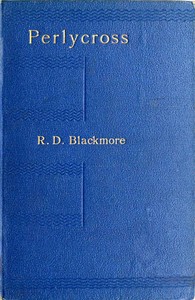
Perlycross: A Tale of the Western Hills — Reading Notes
(0 User reviews)
632
Project Gutenberg
2014
Not confirmed
England -- Social life and customs -- 19th century -- Fiction; Detective and mystery stories; Devon (England) -- Fiction; Romance fiction
Readers of public-domain and historical texts
Project Gutenberg digital edition
en
Edition facts
Words
190,256
Reading time
828 min
Text sections
17
Before opening Perlycross: A Tale of the Western Hills — Reading Notes, the edition data offers a quick orientation: 190,256 words, 13 hr 48 min estimated reading time, and 17 detected text sections.
The text analysis averages about 18.4 words per sentence, while the detected sections provide another way to judge how the source is divided.
Project Gutenberg metadata also associates the work with “England -- Social life and customs -- 19th century -- Fiction,” connecting these edition facts with the source record’s subject description.
Source:
Project Gutenberg record #45038
R. D. Blackmore's 1894 novel set in 1835 Devon blends romance, mystery, and local color. The opening coach journey introduces a clergyman, a sailor, and a gossip, with vivid sensory detail and shifts from comic to grave.
Read the complete public-domain text at its original source.
Read on Project GutenbergThe novel opens on a coach journey in 1835, where the Rev. Philip Penniloe, curate of Perlycross, shares a cramped ride with a boisterous sailor and a malicious watchmaker. Blackmore’s prose shifts rapidly from comic physicality—the sailor’s rum-bottle and chattering teeth—to a tense confrontation when the sailor sings a ribald ballad. The clergyman’s rebuke is firm yet kind, but the watchmaker, Solomon Pack, retaliates by publicly accusing Perlycross of a notorious crime: disturbing the dead. This abrupt pivot from farce to accusation establishes the novel’s tonal volatility.
A Voice That Moves from Jollity to Gravity
Blackmore’s narrator commands a wide vocal range. In the opening chapter, the prose is brisk and sensory: steam from horses, graupel cutting through the air, the sailor’s “rough nautical ballad” described as “stupid … ribaldry.” The diction is colloquial and precise—graupel is a technical term for soft hail. Yet within paragraphs, the tone deepens. When Mr. Penniloe speaks, the narrative adopts a solemn, measured cadence: “administered to that mariner a rebuke so grave, and solemn, and yet so full of large kindness.” The contrast is not merely between characters but within the narrator’s own voice, which can pivot from earthy humor to moral gravity without strain.
Pace as a Tool for Tension and Release
The coach journey is structured by accelerations and decelerations. Early paragraphs linger on physical details—the straw nest, the rattling glass, the “turbid clouds” of breath—creating a slow, immersive buildup. Then the sailor’s song and Penniloe’s rebuke arrive in quick, dramatic bursts. The watchmaker’s accusation is delivered as a “settler,” a sudden halt. Blackmore uses the coach’s motion as a rhythmic device: the narrative lurches with the vehicle, pausing for description, then jolting forward with dialogue. This pattern of tension and release, evident in the first chapter, suggests a novel that will sustain suspense through controlled pacing.
Setting as a Character: The Western Hills in Winter
The Devon landscape is not mere backdrop but an active force. The coach struggles through a “shivering and a shuddering night,” with snow and hail that “cut white streaks … into travellers’ eyes.” The moon disperses clouds as the journey ends, but the environment remains hostile. Blackmore’s descriptions are tactile and meteorological, grounding the narrative in a specific season and place. The lane to Perlycross is a “three-mile trudge” through darkness. This physical hardship colors every interaction: the sailor’s drunkenness, the clergyman’s patience, the watchmaker’s spite. The hills are not picturesque but obstructive, shaping the story’s pace and mood.
Readers should attend to Blackmore’s handling of tempo: the novel’s 44 chapters and 190,000 words suggest a leisurely unfolding, but the opening demonstrates how quickly the narrative can shift register. The mystery hinted at—the dead disturbed—is introduced as a public accusation, not a private clue. Approach the text as a study in contrasts: between rural peace and scandal, between the comic and the solemn, between the slow rhythms of village life and the sudden jolts of revelation.
There’s something about the coach in Perlycross, the way strangers share a cramped, rattling hour and part without quite knowing each other. It reminded me of an old companion, the feeling of being young in a city of passers-by. That quiet loneliness lives again in The Young O'Briens: Being an Account of Their Sojourn in London — Reading Companion, and I find myself oddly grateful for it.
There are no reviews for this eBook.
There are no comments for this eBook.
Reader reflection
What was your reading experience?
Capture what you thought, learned, and would like to remember.
Your progress
0
/
10
2
What was your overall reaction to the book?
3
Would you pass this book on to a friend?
4
How much effort did this book require?
5
How did the reading compare with what you expected?
6
Could you see yourself revisiting this book?
7
Which element worked best for you?
8
Did any part of the book feel personally relevant?
9
What did this book teach you most?
10