1

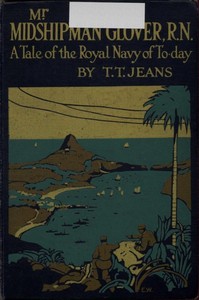
Mr. Midshipman Glover, R.N.: A Tale of the Royal Navy of To-day — Context and Discussion
(0 User reviews)
1302
Project Gutenberg
2014
Not confirmed
Adventure stories; Seafaring life -- Fiction; Great Britain. Royal Navy -- Fiction
Readers of public-domain and historical texts
Project Gutenberg digital edition
en
Edition facts
Words
108,126
Reading time
471 min
Text sections
14
For Mr. Midshipman Glover, R.N.: A Tale of the Royal Navy of To-day — Context and Discussion, the stored edition analysis reports 108,126 words, 7 hr 51 min estimated reading time, and 14 detected text sections.
The text analysis averages about 21.7 words per sentence, while the detected sections provide another way to judge how the source is divided.
Project Gutenberg metadata also associates the work with “Adventure stories,” connecting these edition facts with the source record’s subject description.
Source:
Project Gutenberg record #46441
An editorial note on T.T. Jeans's 1908 naval adventure, examining how the catalog subjects of 'Seafaring life' and 'Great Britain. Royal Navy' align with the text's technical detail, multiple narrators, and portrayal of pirates in a modern naval context.
Read the complete public-domain text at its original source.
Read on Project GutenbergSurgeon Rear-Admiral T. T. Jeans opens his preface with a claim of technical accuracy, crediting Gunnery, Torpedo, and Engineer Lieutenants who read the manuscripts and corrected errors. This assertion of authenticity is borne out in the excerpts, which dwell on ship alterations—lengthened funnels, added fo'c'stles, altered bows—and the workings of a pirate syndicate's ship-repairing yard. The catalog subjects list 'Seafaring life' and 'Great Britain. Royal Navy' as fiction categories, but the text itself reads less as a romanticized sea story and more as a procedural manual embedded in a chase narrative.
Multiple Viewpoints and Technical Detail
The preface explains that Jeans uses a shifting narrative method: some characters 'take up, from each other, the threads of the story and continue the description of incidents from their own points of view,' while the rest is third-person. This technique is visible in the interrogation scene, where Cummins, Helston, and Ping Sang each react differently to the prisoner’s testimony. The technical detail—such as the prisoner’s account of rebuilding captured steamers—is relayed through dialogue, not exposition, giving the reader a sense of overhearing a debriefing. The catalog subject 'Adventure stories' is accurate, but the adventure is heavily mediated by jargon and process.
The Pirates as Industrial Operators
The pirates in this excerpt are not swashbuckling rogues but a syndicate running a 'ship-repairing yard' that works 'at high pressure.' They capture steamers, alter them beyond recognition, and sell them on the mainland. One prisoner describes being recruited from the Foochow Arsenal and put in charge of engines. The catalog subject 'Seafaring life' might suggest a focus on the Royal Navy’s daily routine, but the excerpts show the Navy’s opponents as organized, industrial, and technically skilled. The pirates’ operations are described with the same precision as the Navy’s—a symmetry that undercuts simple hero-villain dichotomies.
Ping Sang’s Personal Stake
Among the interrogators, the Chinese merchant Ping Sang stands out. When the prisoner mentions the captured ship Fi Ting, Ping Sang grows 'very unusual excitement,' asking rapid questions about its masts and bridge. His emotional reaction—'shrieked Ping Sang'—contrasts with the officers’ professional calm. The catalog does not list Ping Sang as a major character, but the excerpts suggest he has a personal history with the pirates, possibly a lost ship. This detail, drawn from a single scene, hints at a subplot that the catalog’s broad categories ('Adventure stories') do not capture.
Readers approaching this book through the catalog subjects should expect a narrative that prioritizes technical accuracy over character development or moral drama. The excerpts show a world where both the Royal Navy and its enemies are defined by their mechanical competence. The shifting narrative voices and the focus on ship-repairing logistics make this an unusual adventure story—one where the most dramatic moments are often about engineering decisions.
There’s a particular ache in reading old naval yarns—the way Jeans renders the Mr. Midshipman world with such careful technical fondness. It makes me think of the quieter tragedy in A Naval Venture: The War Story of an Armoured Cruiser — Story, Setting & Ideas; how that same meticulous seamanship becomes something weightier when war arrives. Both leave a curious lingering, like salt on the air.
There are no reviews for this eBook.
There are no comments for this eBook.
Reader reflection
What was your reading experience?
Capture what you thought, learned, and would like to remember.
Your progress
0
/
10
2
How much did you enjoy the reading experience?
3
Would you recommend this book to another reader?
4
How much effort did this book require?
5
Would you read this book again?
6
Did you relate to its people, ideas, or situations?
7
How much did the book move you?
8
How useful did the reading feel?
9
What did this book teach you most?
10