1


Walking Shadows: Sea Tales and Others — Background and Themes
(0 User reviews)
1151
Project Gutenberg
2013
Not confirmed
World War, 1914-1918 -- Fiction; Short stories, English; Sea stories, English
Readers of public-domain and historical texts
Project Gutenberg digital edition
en
Edition facts
Words
63,360
Reading time
276 min
Text sections
6
The catalog record for Walking Shadows: Sea Tales and Others — Background and Themes provides practical reading context through 63,360 words, 4 hr 36 min estimated reading time, and 6 detected text sections.
The text analysis averages about 17.4 words per sentence, while the detected sections provide another way to judge how the source is divided.
Project Gutenberg metadata also associates the work with “World War, 1914-1918 -- Fiction,” connecting these edition facts with the source record’s subject description.
Source:
Project Gutenberg record #43186
Alfred Noyes's 1918 collection of sea tales and other stories, framed by a verse prelude that sets shadows against official history. The opening story pits a lighthouse keeper against a U-boat commander, while later tales shift to Japanese-American encounters and a mysterious log. Structure and recurring images of light, shadow, and isolation unify the volume.
Read the complete public-domain text at its original source.
Read on Project GutenbergThe collection opens with a verse prelude that establishes a governing tension: official history is a gilded shadow, while the true stories belong to the unrecorded—those who died unreckoned, the keepers of lonely lights. This framing directly informs the first story, “The Light-house,” which pits Peter Ramsay, keeper of the Hatchets’ Light, against the commander of U-99 in October 1916. Noyes builds the scene through precise, parallel domestic and military details: Ramsay has just finished tea and settled down with the British Weekly when the submarine surfaces three miles away. The lighthouse is not merely a setting but a contested space, desired by both men for different reasons, and the narrative moves between their perspectives with a controlled, almost cinematic alternation.
The Prelude as Structural Key
The eleven-stanza prelude, printed before the table of contents, is not ornamental. It announces the book’s method: shadows will “weave a story” for those whom history ignores—outposts in the night, keepers of the light. The verse explicitly contrasts the “accepted lie” of pomp with truths discerned beyond ordered facts. This is not a thematic summary but a structural promise. Each story in the table of contents—from “The Light-house” to “The Hand of the Master”—can be read as a shadow narrative, a counter-history. The prelude also introduces the recurring image of light as both literal (a lighthouse lamp, a window’s glow) and metaphorical (a pinpoint of warmth against darkness). Noyes returns to this image in “The Log of the Evening Star,” where a Japanese kakemono depicts a tiny rose light in a window overlooking the sea, with a ghostly figure reaching toward it.
Shifting Frames and Embedded Documents
Noyes does not rely on a single narrative mode. “The Light-house” is a tight third-person thriller with alternating focalization. Later, “The Log of the Evening Star” shifts to a first-person frame: the narrator visits a Japanese shack on the California coast, where a professor and a collector examine a kakemono—a scroll painting that turns out to be a written message. The story-within-a-story structure is announced by the line, “Sit down and listen.” The physical object—a four-by-two-foot scroll covered in purple copying-pencil—becomes the hinge. The narrator initially mistakes the Japanese characters for decoration, a misreading that the story explicitly corrects. This embedded document, like the prelude’s shadows, challenges the reader to look beyond surface appearances. The collection thus moves between direct action and mediated testimony, each mode requiring a different kind of attention.
Recurring Images: Light, Shadow, and the Sea’s Edge
Across the excerpts, a constellation of images recurs. The prelude speaks of “lonely lights at sea that pass and perish.” In “The Light-house,” the tower is a fixed point of light in a submarine-infested sea. In “The Log of the Evening Star,” the kakemono’s single pinpoint of warm light in a window concentrates “peace and tragic desire.” The sea itself is both a physical setting and a boundary: the lighthouse is six miles from the mainland; the Japanese shack stands at the brink of the sea, where a ghostly figure is blown offshore. The shadow motif is equally persistent. The prelude’s shadows “walk awhile with dreams” and follow “flying gleams.” The title Walking Shadows itself suggests figures that are both insubstantial and mobile. These images are not merely atmospheric; they structure the reader’s movement between stories, creating a visual and emotional coherence that offsets the variety of plots.
Movement Between Worlds: Submarine and Shack
The collection’s geography is striking. The first story is set in the North Atlantic during wartime, inside a lighthouse and a U-boat. The later excerpt moves to a Japanese fishing community on the California coast, where a shack with a birdhouse and a Sweet Caporal placard houses a professor and a scroll. The shift is abrupt: from military tension to domestic Orientalism, from the claustrophobic tower to a bare living-room with a kakemono. Yet the movement is not random. Both settings are liminal—the lighthouse at the edge of the sea, the shack at the water’s edge. Both involve a character who wishes to get inside (the U-boat commander wants to enter the lighthouse; the narrator enters Kato’s home). Both hinge on a secret: the submarine’s trickery, the scroll’s hidden message. Noyes uses these parallel structures to suggest that the same shadows—of war, of loss, of unrecorded lives—haunt both the Atlantic and the Pacific, the 1916 war zone and the seemingly peaceful coast.
Readers may find it useful to track how each story returns to the prelude’s central image: a light that is small, isolated, and threatened. The collection does not build toward a single revelation; instead, it offers variations on a pattern. The lighthouse keeper, the Japanese fisherman, the ghost in the kakemono—all are keepers of lights that history might overlook. Noyes’s craft lies in making those lights visible, if only for a moment, before they pass.
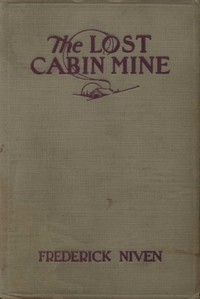
That rainy afternoon, the lighthouse keeper’s solitary beam against the U-boat’s dark hull lingered with me—light and shadow as quiet rivals. I set the book down and, absentmindedly, reached for another on the shelf, finding a similar solitude in barren hills. The Lost Cabin Mine — Background and Themes felt like the same whispered waiting, just moved inland.
There are no reviews for this eBook.
There are no comments for this eBook.
Reader reflection
What was your reading experience?
Capture what you thought, learned, and would like to remember.
Your progress
0
/
10
2
How much did you enjoy the reading experience?
3
Would you pass this book on to a friend?
4
How easy was the book to follow?
5
Did any part of the book feel personally relevant?
6
Could you apply anything you learned?
7
How would you rate its originality?
8
Could you follow the author’s main argument?
9
Which lesson or insight stayed with you?
10