1

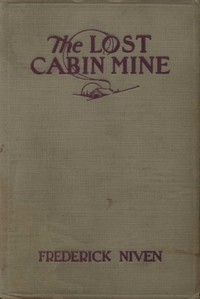
The Lost Cabin Mine — Background and Themes
(0 User reviews)
133
Project Gutenberg
2013
Not confirmed
Western stories; Adventure stories; Mines and mineral resources -- Fiction
Readers of public-domain and historical texts
Project Gutenberg digital edition
en
Edition facts
Words
77,059
Reading time
336 min
Text sections
11
The Lost Cabin Mine — Background and Themes can be approached with a clearer sense of reading commitment from its source measurements: 77,059 words, 5 hr 36 min estimated reading time, and 11 detected text sections.
The text analysis averages about 19.0 words per sentence, while the detected sections provide another way to judge how the source is divided.
Project Gutenberg metadata also associates the work with “Western stories,” connecting these edition facts with the source record’s subject description.
Source:
Project Gutenberg record #43975
Frederick Niven's 1908 adventure novel uses a first-person narrator who recounts the search for a legendary mine in the Oregon wilderness. The story unfolds through layered storytelling, with the narrator initially hearing an unfinished tale from a hotel keeper, then becoming a participant in the dangerous quest. The narrative is marked by vivid descriptions of landscape, tense silences, and the enigmatic figure of the Apache Kid.
Read the complete public-domain text at its original source.
Read on Project GutenbergThe Lost Cabin Mine opens not with the mine itself but with a man sitting alone on a hotel verandah in Baker City, watching cicadas hop across sun-scorched flats. The narrator, whose name emerges only gradually, is a drifter without a job, and the story he hears—and later becomes part of—arrives in fragments. The landlord, a thin, furtive man with tiny alert eyes, carries a parrot's cage onto the verandah, and their casual exchange about the heat gives way to a tale that the landlord has only half-told before. This framing device, with its deliberate withholding and delayed revelation, establishes a structure built on interrupted narratives and the slow accumulation of danger.
A Story Told in Pieces
The novel's opening chapter signals that the full story of the Lost Cabin Mine is known to no living person—'dead men tell no tales,' the narrator states flatly. The narrative proceeds through a series of nested accounts: the landlord's unfinished story, the narrator's own letters home (toned down for his mother's sensibilities), and the recollections of the Apache Kid. This layered approach means that information arrives out of sequence, with gaps that the reader must fill. The narrator explicitly dates his first hearing of the tale to June 6, 1900, and later verifies it by finding a letter tied with red silk ribbon. Such precise documentation contrasts with the uncertainty of what actually happened in the wilderness, creating a tension between recorded fact and the unreliability of memory.
Landscape as a Character
The physical environment in The Lost Cabin Mine is rendered with careful attention to sensory detail. The narrator describes the 'white wedge of the glacier, near the summit, glistening dry and clear like salt' and the 'heat haze' that makes lower trees appear to tremble. As the party moves into the mountains, the silence becomes 'more august' than that of the plain, and the wood is marked by 'the utter lack of even the faintest twitter of any bird.' The trail they follow is not a clear path but a route formed by travelers over years, each adding to a faint impression that may not have been used for a year or more. The Apache Kid notes that a hoofprint might be his own from three years earlier, suggesting a landscape that holds traces of past journeys but yields no easy passage.
The Unreliable Guide
The character called Apache Kid dominates the narrative with his cryptic remarks and withheld knowledge. He speaks 'more to the air than to you,' and his comments about being 'pushed close' by unknown pursuers are delivered so absently that the narrator chooses not to question him. When the party enters the woods, Apache Kid whispers, and the narrator attributes this to the environment's hushing influence. Yet the Kid's behavior also suggests a man accustomed to secrecy and danger. He scans the plain below with 'eyelids puckered,' notes that two parties have followed them, and wonders aloud where a man named Canlan might be. These details build a portrait of a guide who knows more than he reveals, and whose past remains deliberately obscure.
Movement Between Silence and Speech
The novel's rhythm alternates between extended passages of quiet observation and sudden bursts of action or revelation. The narrator's initial reverie on the verandah is broken by the landlord's arrival; later, the long trek across the plain gives way to the 'silence more august' of the forest. Even within dialogue, there are pauses that carry meaning: the Apache Kid stops to consider, Donoghue rocks 'impotent and dazed,' and the narrator forbears to ask questions. These shifts in pace mirror the characters' uncertainty about what lies ahead. The story itself moves between the known—the date, the letters, the hotel—and the unknown, the mine that may or may not exist, the fate of those who sought it before.
Readers approaching The Lost Cabin Mine should attend to what is left unsaid as much as to what is spoken. The narrator's role as both listener and participant means that the story is filtered through his limited knowledge, and the Apache Kid's evasiveness ensures that motives remain ambiguous. The landscape, too, with its trails that may be years old and its silences that seem to forbid speech, functions as an active force in the narrative. This is a story about the search for something hidden, and the act of telling itself becomes part of that search.
Reading about Niven’s silent forests and that unfinished tale reminded me of another old story’s patient shadows—how both books hold their secrets close, letting the waiting do the work. There’s a particular hush in The Lost Cabin Mine that lingers, much like the quiet unease in The Hunchback of Westminster — Inside the Classic. Strange, how two such different landscapes can share one lonely feeling.
There are no reviews for this eBook.
There are no comments for this eBook.
Reader reflection
What was your reading experience?
Capture what you thought, learned, and would like to remember.
Your progress
0
/
10
2
Was reading this book enjoyable?
3
How likely are you to recommend this book?
4
What was the reading difficulty like?
5
Was the book what you thought it would be?
6
Which aspect of the book did you value most?
7
Would a second reading be valuable?
8
Did any part of the book stay with you emotionally?
9
What did this book teach you most?
10