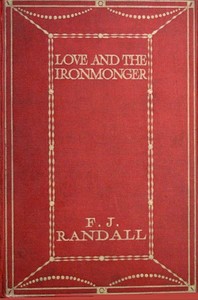
Love and the Ironmonger
Edition facts
The novel opens with George Early arriving half an hour late at Fairbrother and Co., an ironmonger firm on Upper Thames Street. The head clerk's mild threat—'there'll be a vacancy in this office'—is undercut by the narrator's assurance that Fairbrothers' 'never dismissed a man unless he was a downright rogue.' This tension between official discipline and actual leniency sets the tone for a comedy built on small deceptions and domestic anxieties.
Randall establishes a world where superstition and coincidence govern daily life. In the Early household, a spilled salt cellar, crossed knives, and a dropped spoon each trigger elaborate rituals and forebodings. George's wife reads these signs with theatrical gravity, while George counters with mundane explanations—'it's the sweep; these chimneys are in a terrible state.' The interplay between her dread and his literal-mindedness drives much of the early comedy.
Office Politics and the Iron Trade
Fairbrother & Co. operates on a principle of benevolent inertia. The narrator notes that 'if a man once got a seat on an office-stool there he was considered to have a berth for life.' This security breeds a casual insubordination: employees 'affected contrition and laughed up their sleeve' at threats from anyone but Old Joe Fairbrother. George's morning routine—consulting the sporting column after arriving late—exemplifies this relaxed culture.
The setting is specific: Upper Thames Street, the heart of London's iron trade. Randall grounds the comedy in commercial detail, from ledgers to the 'general air of safety' that makes the office 'soothing.' Yet this stability is constantly tested by George's minor transgressions and the head clerk's ritual scolding. The firm's reputation for secret charity toward dismissed rogues hints at a moral code beneath the easy-going surface.
Domestic Omens and Marital Comedy
Chapter XV, 'Aunt Phœbe surprises her Nephew,' showcases Randall's skill with domestic farce. Mrs. Early's string of superstitions—spilled salt, crossed knives, a dropped spoon—creates a crescendo of anxiety. George's responses are deliberately obtuse: 'I know: it's the sweep.' When the dreaded news arrives, it is merely that Aunt Phœbe is coming to stay. Mrs. Early's reaction—'George, I hate you!'—is followed by a kiss, a pattern of mock outrage and reconciliation.
The episode reveals a marriage built on affectionate antagonism. George's teasing defuses his wife's fears, but her intuition persists: 'I can't get over the feeling that something is going to happen.' Randall leaves the source of this unease ambiguous, blending genuine superstition with comic misdirection. The chapter ends with a new worry—Martha the maid may be leaving—suggesting that domestic life is a series of small crises, each deflected by humor.
The Whisky Network: 'Tommy Morgan'
A recurring motif is the mysterious whisky 'Tommy Morgan,' introduced in a chance encounter between a clerk named Gray and a traveller named Mole. Mole describes it as 'an acquired taste' and insists on sending a free bottle. The brand name becomes a token of masculine camaraderie and commercial networking. Gray's wife, however, views the meeting with suspicion: 'Seems to me rather unlucky to meet a man named Mole on a Friday.'
Randall uses the whisky to explore themes of trust and salesmanship. Mole's insistence that 'I drink nothing else but Tommy' and his connection to the distillery through a brother-in-law suggest a closed circle of endorsement. The episode is brief but pointed, contrasting Gray's professional openness with his wife's superstitious caution. The whisky's name—'Tommy Morgan'—recurs in the chapter title, hinting at its symbolic weight in the novel's social economy.
Readers will find that Randall's comedy depends on precise observation of Edwardian London's commercial and domestic rituals. The ironmonger's office and the Early household are both governed by unwritten rules—of leniency, superstition, and marital banter. Pay attention to how minor objects (salt cellars, whisky bottles, letters) trigger the plot's small upheavals. The novel rewards attention to its rhythms of threat and reassurance, where a dropped spoon portends a stranger and a late arrival prompts only a wink.