1

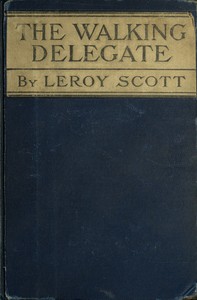
The Walking Delegate — Reading Notes
(0 User reviews)
1355
Project Gutenberg
2012
Not confirmed
New York (N.Y.) -- Fiction; Strikes and lockouts -- Fiction; Labor unions -- Fiction; Construction industry -- Fiction
Readers of public-domain and historical texts
Project Gutenberg digital edition
en
Edition facts
Words
95,297
Reading time
415 min
Text sections
11
This digital edition of The Walking Delegate — Reading Notes is described by source-level measurements including 95,297 words, 6 hr 55 min estimated reading time, and 11 detected text sections.
The text analysis averages about 13.1 words per sentence, while the detected sections provide another way to judge how the source is divided.
Project Gutenberg metadata also associates the work with “New York (N.Y.) -- Fiction,” connecting these edition facts with the source record’s subject description.
Source:
Project Gutenberg record #41154
Leroy Scott's 1905 novel follows union foreman Tom Keating and walking delegate Buck Foley in New York's construction industry, using the unfinished St. Etienne Hotel as a central image. The narrative shifts between high steel, back rooms, and street-level conflict, with recurring motifs of precarious footing and physical struggle.
Read the complete public-domain text at its original source.
Read on Project GutenbergThe St. Etienne Hotel, still only a steel framework, dominates the opening of Leroy Scott's The Walking Delegate. Mr. Driscoll, a contractor, stands on its loosely-planked twenty-first story, watching his men work while a raw February wind pushes through his office-tendered flesh. The building is not yet a hotel—it is a black pier supporting the grimy arch of heaven, a structure defined by gaps his men are wont to leap. This unfinished tower becomes the novel's central image: a place where labor, capital, and violence meet, and where every step requires care.
High Steel and Low Rooms
The novel moves between two kinds of space: the exposed heights of construction and the enclosed interiors where deals are struck. The opening chapter places us on the twenty-first story, where the wind scrapes under dirty clouds and the view is a grid of roofs, water, and more roofs. Later scenes shift to Foley's 'office'—likely a back room—and to the cramped quarters where men like Nels Petersen live. The contrast is not merely scenic: the high steel demands physical nerve, while the low rooms test moral nerve. Scott uses these settings to frame the action, so that a fall from a beam and a fall from power are parallel risks.
The Walking Delegate as a Figure of Motion
The title character, Buck Foley, is defined by his role as a walking delegate—a union official who moves between job sites, men, and bosses. The excerpts show him orchestrating violence and negotiation alike, never static. In one scene, he directs a struggle from the sidelines, calling out orders while others grapple. His authority depends on being in motion, on appearing where he is needed. The novel's structure mirrors this: chapters shift rapidly between characters and locations, from the hotel framework to the streets to private conferences. Foley's mobility is both his strength and his vulnerability, as the narrative keeps him always within reach of his enemies.
Struggle as a Recurring Pattern
Physical combat recurs throughout the excerpts, often described in precise, mechanical detail. The fight between Petersen, Smoky, and Kaffir Bill is a tangle of arms, legs, and grunts, with each combatant trying to gain a positional advantage. Tom Keating's struggle with Jake over a revolver is equally static and desperate: 'like that of two bulls which stand braced, with locked horns.' These fights are not just action set-pieces; they echo the larger conflicts of the strike and the union election. Scott renders each grapple as a deadlock that must be broken by a shift in leverage, whether physical or political. The wounded man crawling for the gun, leaving a moist trail on the bare floor, is a reminder that every struggle has consequences that stain the ground.
The Unfinished Building as a Character
The St. Etienne Hotel is more than a setting; it is a presence that shapes the novel's language and tension. It is described as 'bulky and garishly magnificent' in potential, but in the present it is only a skeleton. The men work on loose planks, leaping gaps, exposed to the wind. This unfinished state mirrors the plot's central instability: the union election, the strike, the alliances—all are in progress, none resolved. The building will eventually be a hotel, but the novel never shows it finished. Instead, it remains a framework on which the characters act out their conflicts. Scott uses the building to give the narrative a vertical dimension, with power and danger distributed across its incomplete floors.
Readers should attend to the novel's spatial logic: who stands above, who below, who moves and who is pinned. The unfinished hotel is not a backdrop but an active element in every scene set upon it. Scott's prose is lean and physical, favoring action over interior monologue. The excerpts suggest a work that earns its conflicts through concrete detail rather than abstract argument.
The rain drummed on the windows while I followed Tom’s precarious steps across the unfinished hotel's steel beams, the city a blurred threat below. That sense of faith tested by shaky ground lingered long after I closed it, leading me later that week to a quieter story about belief’s private reckonings, They Looked and Loved; Or, Won by Faith — Text and Context, where the footing was emotional, not iron.
There are no reviews for this eBook.
There are no comments for this eBook.
Reader reflection
Take a moment to reflect on this book
Create a short personal record of your experience with this book.
Your progress
0
/
10
2
Was reading this book enjoyable?
3
How likely are you to recommend this book?
4
Did the language feel accessible?
5
Did you gain anything practical from the text?
6
Would you read this book again?
7
How did the pace of the book feel?
8
What was its emotional impact?
9
In one sentence, what did you learn?
10