1

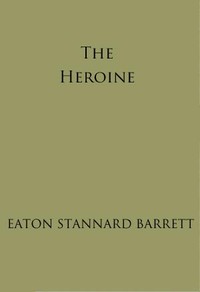
The Heroine — Story, Setting & Ideas
(0 User reviews)
496
Project Gutenberg
2013
Not confirmed
Identity (Psychology) -- Fiction; Heroes -- Fiction; Gothic fiction -- Parodies, imitations, etc.
Readers of public-domain and historical texts
Project Gutenberg digital edition
en
Edition facts
Words
111,696
Reading time
486 min
Text sections
11
Before opening The Heroine — Story, Setting & Ideas, the edition data offers a quick orientation: 111,696 words, 8 hr 6 min estimated reading time, and 11 detected text sections.
The text analysis averages about 17.8 words per sentence, while the detected sections provide another way to judge how the source is divided.
Project Gutenberg metadata also associates the work with “Identity (Psychology) -- Fiction,” connecting these edition facts with the source record’s subject description.
Source:
Project Gutenberg record #43065
Eaton Stannard Barrett's 1813 parody follows Cherubina, a young woman whose addiction to Gothic novels leads her to adopt absurdly theatrical poses. The excerpt reveals a narrative voice that oscillates between mock-heroic grandeur and deflating bathos, as when a would-be tragic deathbed scene is undercut by a rheumatism diagnosis. The satire targets both literary conventions and the gap between sentimental ideals and mundane reality.
Read the complete public-domain text at its original source.
Read on Project GutenbergEaton Stannard Barrett's The Heroine (1813) opens a satirical vein that runs through the entire work: the collision between Gothic novel conventions and the stubbornly unromantic details of everyday life. The narrator, Cherubina, speaks in a voice that is at once grandiose and self-mocking, a tone established early when she prepares for death with theatrical flourishes—sprinkling flowers, calling for wine—only to have her solemnity punctured by a physician's diagnosis of rheumatism. This pattern of raised expectations and comic deflation is the book's central rhetorical device, and it depends on a precise control of pace: the narrative lingers on Cherubina's elaborate fantasies, then accelerates into blunt reality.
The Mock-Heroic Voice and Its Targets
Cherubina's narration is a sustained parody of the sentimental heroine's interior monologue. She describes her deathbed preparations with the gravity of a tragic queen: 'I sent her and the domestics out of the chamber, that I might prepare for my approaching end.' Yet the high style is immediately undercut by her pragmatic concerns—she cannot abide wine 'in a morning,' and she has no friends to summon. The voice shifts between elevated diction and colloquial asides, creating a rhythm of inflation and collapse. Barrett targets not only Gothic clichés (the dying Heloise, the picturesque prayer) but also the moral complacency of heroines who assume their virtue guarantees salvation. Cherubina's sudden recollection of church teachings introduces a serious note, but even this is soon dissolved by the rheumatism revelation. The effect is a narrative that keeps the reader off-balance, never sure whether the next sentence will soar or stumble.
Pace and the Art of Anticlimax
The excerpt demonstrates Barrett's mastery of comic timing. Cherubina's crisis builds through a series of escalating anxieties—death, damnation, social embarrassment—only to be resolved by a mundane medical explanation. The physician's declaration that her disorder is 'nothing but a violent rheumatism' is a masterstroke of anticlimax, and Cherubina's relief is immediate and total: 'Never was transport equal to mine.' The pace then shifts again as she frets about missing a ball, a concern that reduces her earlier spiritual terror to a mere prelude. This rapid alternation between high and low registers is characteristic of the novel's structure. Barrett uses short paragraphs and abrupt transitions to mimic the heroine's volatile emotions, while longer, more elaborate sentences appear when she indulges in literary fantasy. The result is a reading experience that feels both breathless and deliberately controlled.
Recurring Details and Thematic Consistency
Several details in the excerpt recur throughout the novel, reinforcing its satirical aims. Cherubina's obsession with 'memoirs'—she promises the physician 'a place in my memoirs'—signals her desire to turn life into a publishable narrative. The motif of the 'sprinkled' chamber (flowers, perfumes) reappears whenever she tries to stage a scene. More subtly, the contrast between 'speculative and generalized' religion and the 'duteous prayers' she cannot perform points to a persistent critique of sentimental piety. Barrett also uses proper names as shorthand: 'Stuart' is mentioned without explanation, suggesting a cast of characters whose roles are already familiar to the reader. These recurring elements create a cohesive world where every gesture is a quotation from some novel, and every emotion is filtered through literary precedent. The satire is not merely parodic but cumulative, building its case through repetition and variation.
Readers approaching The Heroine should attend to the way Barrett manipulates tempo: the novel's humor depends on sudden shifts from elaborate fantasy to deflating reality. Cherubina's voice is the vehicle for this effect, and her self-consciousness about her own narration—her awareness of 'memoirs' and precedents—adds a layer of metafictional play. The excerpts suggest a work that rewards attention to its verbal texture and structural patterns, rather than to plot or character development in the conventional sense.
Years among the stacks taught me how The Heroine laughs at its own costume, knowing the pose will crumple. There is a gentler cousin in The Walking Delegate — Reading Notes, where earnest striving meets its own quiet shrug. Both whisper that our finest dramas stumble into plain rheumatism, and that is somehow enough.
There are no reviews for this eBook.
There are no comments for this eBook.
Reader reflection
What did you think of this book?
Answer a few questions and save a private reflection on this device.
Your progress
0
/
10
2
How did the book work for you overall?
3
How likely are you to recommend this book?
4
How much effort did this book require?
5
How original did the book feel?
6
How much did the book move you?
7
How personally connected did you feel to the book?
8
Do you expect to return to this book?
9
What is the main idea you are taking away?
10