1

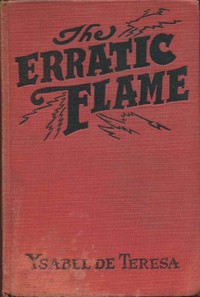
The erratic flame — Text and Context
(0 User reviews)
305
Project Gutenberg
2014
Not confirmed
New York (N.Y.) -- Fiction; Italy -- Fiction; Man-woman relationships -- Fiction; Violinists -- Fiction
Readers of public-domain and historical texts
Project Gutenberg digital edition
en
Edition facts
Words
93,717
Reading time
408 min
Text sections
29
Before opening The erratic flame — Text and Context, the edition data offers a quick orientation: 93,717 words, 6 hr 48 min estimated reading time, and 29 detected text sections.
The text analysis averages about 11.0 words per sentence, while the detected sections provide another way to judge how the source is divided.
Project Gutenberg metadata also associates the work with “New York (N.Y.) -- Fiction,” connecting these edition facts with the source record’s subject description.
Source:
Project Gutenberg record #45842
Ysabel de Teresa's 1926 novel follows violinist Alexis's return to New York and his fraught relationships with Anne and Claire. The narrative shifts between Anne's world-weary escape into a mountain hut and Claire's emotional vigil, with the violin's voice marking changes in pace and mood.
Read the complete public-domain text at its original source.
Read on Project GutenbergThe novel opens with Anne, surfeited and world-weary after a hectic summer, seeking solitude in a rain-soaked mountain hut. The prose matches her mood: the mist resolves into a steady downpour, and her spirit is cleansed within the gray mantle of the rain. This sensory, atmospheric writing establishes a pattern of external weather mirroring internal states. The hut itself is decrepit, ramshackle, and its door resists her with almost personal violence—a detail that hints at the resistance she will encounter. Inside, she finds a man, Alexis, whose tumbled, lolling head and trailing hand suggest a collapse that is both physical and artistic. The scene sets up a central tension: the desire for escape versus the pull of human connection.
Voice and the Shifting Pace of Emotion
The narrative voice in The Erratic Flame is notable for its close alignment with character perception, often shifting pace to reflect emotional intensity. In the opening, Anne’s relief is rendered in long, flowing sentences: her whole being cleansed within the gray mantle of the rain. The rhythm slows, matching her restored serenity. But when she discovers Alexis, the prose sharpens into shorter, fragmented observations: a denser blackness prevailed, which as she approached resolved itself into a couch and a mass of tossed blankets. This quickening pace mirrors her sudden alertness.
Later, in the conversation between Claire and Alexis, the dialogue is punctuated by gestures and internal reactions that create a staccato rhythm. Claire’s gloved hands tighten; Alexis runs a hand through his tumbled hair. The pace accelerates when he plays the violin: the penetrating sweetness pierced Claire’s heart. The music itself becomes a structural device, with the narrative rising and falling in tempo alongside the melody.
Recurring Motifs: Rain, Flowers, and the Violin
Three motifs recur across the excerpts, each carrying emotional weight. Rain appears first as a cleansing force—the gray mantle of the rain—but later, in Claire’s scene, it is absent, replaced by the artificial brightness of a sickroom. Flowers also shift in meaning: Anne encounters none in the hut, but Claire sees several large jars filled with flowers and exclaims impulsively, then regrets it, suspecting they were sent by a rival. The flowers become a marker of social competition and hidden pain.
The violin is the most persistent motif. It is not merely an instrument but an extension of Alexis’s identity. When he plays, the instrument hummed beneath his sweeping bow like a human thing. The music is described as simple as an ancient love song, yet it rises to head notes clear and brittle as crystal. This duality—simplicity and fragility—echoes the characters’ own tensions.
Structure and the Use of Ellipsis
The excerpts reveal a narrative structure that relies on ellipsis and abrupt transitions. The opening chapter, “The Scorching Limelight,” begins in medias res with Anne already in the rain. The chapter titles themselves suggest a pattern of emotional highs and lows: “Escapade,” “Dark Despair,” “Rapture,” “Discord,” “Anti-Climax.” This sequence implies a cyclical rather than linear progression.
Within scenes, the text often cuts away at moments of high tension. For instance, after Alexis plays the violin, the narrative jumps to a later conversation about his move to Long Island. The gaps force the reader to infer the emotional aftermath. Similarly, the ellipsis in the excerpt—[...] air—suggests that the text has been condensed, but the original likely used similar breaks to shift perspective or time. This technique keeps the pace uneven, mirroring the erratic flame of the title.
Readers should attend to the way de Teresa uses weather, music, and objects like flowers to signal changes in character mood and narrative tempo. The novel’s structure, with its chapter titles that read like emotional stages, rewards attention to how each scene builds and releases tension. The excerpts offer only a partial view, but they suggest a work that values atmosphere and psychological nuance over plot mechanics.
I’ve always found something tender in how The Erratic Flame holds its quiet violinist, how longing itself becomes the melody. There’s a similar warmth in the pages of They Looked and Loved; Or, Won by Faith — Text and Context, where devotion asks so little yet waits so patiently. Both books whisper rather than proclaim, and that has always felt like home.
There are no reviews for this eBook.
There are no comments for this eBook.
Reader reflection
Record your reading impressions
A brief reflection can help important ideas stay with you longer.
Your progress
0
/
10
2
How much did you enjoy the reading experience?
3
Would you pass this book on to a friend?
4
How easy was the book to follow?
5
Did this book create an emotional response?
6
How understandable was the text?
7
Is this a title worth rereading?
8
How distinctive were its ideas or approach?
9
What did this book teach you most?
10