1

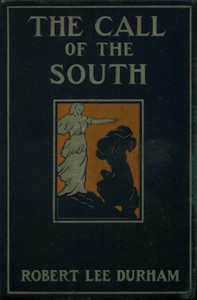
The Call of the South — Background and Themes
(0 User reviews)
1533
Project Gutenberg
2014
Not confirmed
Race relations -- Fiction; Racism -- Fiction; Miscegenation -- Fiction
Readers of public-domain and historical texts
Project Gutenberg digital edition
en
Edition facts
Words
123,306
Reading time
537 min
Text sections
18
This digital edition of The Call of the South — Background and Themes is described by source-level measurements including 123,306 words, 8 hr 57 min estimated reading time, and 18 detected text sections.
The text analysis averages about 18.9 words per sentence, while the detected sections provide another way to judge how the source is divided.
Project Gutenberg metadata also associates the work with “Race relations -- Fiction,” connecting these edition facts with the source record’s subject description.
Source:
Project Gutenberg record #45206
An editorial note on Robert Lee Durham's 1908 novel, focusing on its structure, recurring images, and movement between scenes, with observations drawn from the opening chapter and a stable-yard dialogue.
Read the complete public-domain text at its original source.
Read on Project GutenbergThe novel opens not in the American South but in a brilliantly lighted armory in Ohio, where the 71st Ohio regiment awaits orders to enforce the Monroe Doctrine against Germany over Venezuela. This geopolitical framing immediately establishes a tension between national duty and regional identity. The narrative then shifts to a domestic scene of horse preparation, where a footman named Hayward silently corrects a young gentleman's equestrian errors. The movement from international crisis to intimate stable-yard comedy sets up a pattern of juxtaposition that recurs throughout the excerpts.
From Armory to Stable: Structural Juxtapositions
The opening chapter's rapid transition from a war-room atmosphere to a dialogue about spavin and snaffle-reins exemplifies Durham's structural method. The armory scene is dense with proper nouns—the 71st Ohio, the Hague Tribunal, Señor Emilio Mañana—and a timeline precise to January 191-. In contrast, the stable scene is immediate and sensory: a swollen knee, a broken rein, a laugh. This shift from abstract geopolitics to concrete horseflesh is not merely a change of setting but a deliberate structural hinge. The reader is asked to hold two scales of conflict simultaneously: the imperial standoff with Germany and the social friction between a footman and his social superior. The novel appears to build its drama from such juxtapositions, moving between public duty and private expertise.
The Horse as Recurring Image and Social Barometer
Horses are not merely transportation in these excerpts; they are instruments of character revelation and social commentary. Prince William, the mare, is described with care: his knee is struck against a hub, his bridle has only one rein, and his behavior under curb versus snaffle is debated. The horse becomes a test of knowledge. Bobby Scott, the young gentleman, mistakes spavin for a knee ailment, revealing his inexperience despite his claims to cavalry training. Hayward, the footman, corrects him with a laugh he must suppress. The image recurs when Bobby later lectures on horsemanship while Hayward silently judges. The horse thus carries the weight of class distinction: who knows the animal, who rides it, and who merely talks about riding. The recurring focus on tack and gait suggests that mastery over horses parallels mastery over social roles.
Movement Between Scenes: From Public to Private Space
The excerpts show a pattern of movement from formal, public spaces to more intimate, practical ones. The armory is a stage for national rhetoric; the stable is a backstage where expertise is demonstrated. The dialogue between Bobby and Helen occurs while riding, a semi-public activity, but the stable conversation with Hayward is a private negotiation of authority. The asterisks in the text mark a temporal jump, but the continuity of the horse theme binds the scenes. This movement is not random: each shift recalibrates the reader's understanding of who holds knowledge. The footman's final remark—"What he doesn't know is something considerable"—is delivered in solitude, a private verdict that the public scene could not accommodate. The novel's structure thus uses scene changes to expose the gap between appearance and competence.
Voice and Dialogue: The Weight of Unspoken Knowledge
Durham's dialogue carries much of the narrative's tension through what is left unsaid. When Bobby Scott claims that "the under-classes do not ride well," Helen refrains from pointing out that the hoi polloi cannot afford horses. Her silence is a choice that the text registers without comment. Similarly, Hayward's laugh is suppressed, his correction offered with a "Beg pardon, sir." The dialogue is layered with deference and irony. Bobby's quotations of Kipling and his talk of "feats of arms" contrast with his actual ignorance. The voice of the footman is precise and practical; the voice of the gentleman is confident but hollow. The excerpts suggest that the novel's interest lies not in overt conflict but in the quiet friction of expertise versus status, a friction that the structure of scene and image repeatedly brings to the surface.
Readers attentive to the novel's early scenes will find that Durham establishes a pattern of structural contrast—between public and private, national and local, stated and implied—that rewards close attention to transitions. The horse, as a recurring image, serves as a touchstone for character and social position. The excerpts offer no resolution, but they suggest a narrative that values the concrete detail over the grand pronouncement.
I keep returning to that editorial note about Durham’s stable-yard dialogue, the unhurried way it lets a scene breathe. It reminded me, oddly, of another book’s quiet patience—how character emerges from what’s left unsaid between pauses. Perhaps it’s the shared fondness for small, revealing moments. That same warmth lives in The Man Who Was Good — Text and Context, though its mood is darker, more withdrawn. Still, both feel like old friends one remembers without trying.
There are no reviews for this eBook.
There are no comments for this eBook.
Reader reflection
Record your reading impressions
A brief reflection can help important ideas stay with you longer.
Your progress
0
/
10
2
Was reading this book enjoyable?
3
Would you pass this book on to a friend?
4
How easy was the book to follow?
5
Did this book create an emotional response?
6
Which aspect of the book did you value most?
7
Did the book give you something worth debating?
8
What did you think about the pace?
9
Which lesson or insight stayed with you?
10