1

The Thorn in the Nest — Edition Insights
(0 User reviews)
1890
Project Gutenberg
2014
Not confirmed
Christian life -- Fiction; Physicians -- Fiction; Frontier and pioneer life -- Ohio -- Fiction
Readers of public-domain and historical texts
Project Gutenberg digital edition
en
Edition facts
Words
82,911
Reading time
361 min
Text sections
11
The Thorn in the Nest — Edition Insights can be approached with a clearer sense of reading commitment from its source measurements: 82,911 words, 6 hr 1 min estimated reading time, and 11 detected text sections.
The text analysis averages about 20.4 words per sentence, while the detected sections provide another way to judge how the source is divided.
Project Gutenberg metadata also associates the work with “Christian life -- Fiction,” connecting these edition facts with the source record’s subject description.
Source:
Project Gutenberg record #46250
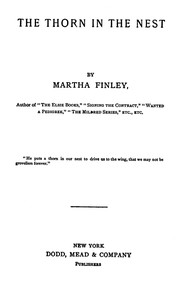
This editorial note examines how Martha Finley's 1886 frontier novel uses its opening, middle, and later excerpts to establish setting, character dynamics, and suspense, guiding a first reading through specific textual evidence.
Read the complete public-domain text at its original source.
Read on Project GutenbergThe novel opens in spring 1797 with a detailed description of a sequestered valley in Western Pennsylvania, emphasizing the landscape's beauty and isolation. The narrative quickly introduces Kenneth Clendenin, a doctor, returning home on his horse Romeo. The scene establishes a domestic setting with a farmhouse, a negro boy named Zeb, and a wood fire, but also hints at underlying tensions through the mention of the Alleghenies and the fading light. This opening grounds the reader in a specific time and place, while the dialogue between Kenneth and Zeb reveals a routine of care and service, setting the stage for the doctor's role in the community.
Setting as Character
The opening excerpt paints a vivid picture of the valley: "a green hillside dotted here and there with stately oaks and elms," with "dense forests and wooded hills" and "the giant Alleghenies" in the distance. This is not mere backdrop; the setting actively shapes the story. The farmhouse is "large, roomy, substantial; beautiful with climbing vines and flowering shrubs," suggesting prosperity and stability. Yet the surrounding wilderness and the mention of "the storms of the past winter" imply vulnerability. The author uses the landscape to create a sense of both security and threat, a duality that recurs throughout the excerpts. The valley is a haven, but the mountains and forests also harbor dangers, as later scenes with Indians and panthers confirm. Readers should note how the physical environment mirrors the characters' emotional states and foreshadows conflicts.
Character Dynamics and Dialogue
The excerpts reveal character through dialogue and action. Kenneth Clendenin is portrayed as a competent, caring doctor, but also as a man tormented by unspoken love. In the middle excerpt, his internal conflict is laid bare: "What a heartless wretch must I appear to her!" he groans, pacing his office. This contrasts with his professional demeanor when treating Mrs. Barbour, whose hysterics are triggered by fear of Indians. The dialogue with Mrs. Hedwig, with her thick German accent ("Mine mudder she send me for you, doctor, to goame right quick to Meeses Barbour"), adds regional color and highlights the multicultural frontier. Nell, though not present in the opening, is a focal point of Kenneth's thoughts, and her reactions—"the trembling of her slender fingers"—are observed closely. The interplay between characters is marked by restraint and unspoken tensions, particularly in the scene where Kenneth and Lyttleton react to a sudden knock, each revealing their protective or fearful instincts.
Suspense and Foreshadowing
The excerpts build suspense through careful pacing and foreshadowing. The opening's peaceful description is undercut by the phrase "night drew on apace" and the fading light, suggesting impending darkness. Later, a "thundering rap upon the outer door" startles the characters, who fear "the threatened danger had come." This danger is linked to Indian attacks, a recurring concern in the middle excerpt where Mrs. Barbour's hysteria is sparked by talk of Indians. The author uses small details—a panther adventure mentioned in passing, Wolf's "lecherous stare," and the fortification of the town—to create a sense of pervasive threat. The reader is left to wonder what specific dangers will materialize. The structure of the excerpts, moving from domestic calm to anxious moments, mirrors the novel's likely rhythm of safety and peril.
The Doctor's Inner Turmoil
Kenneth Clendenin's internal struggle is a central thread. In the middle excerpt, after a late night attending Mrs. Barbour, he is consumed by thoughts of Nell: "His thoughts were full of Nell, going over and over each scene in his life in which she had borne a part." He experiences "cold drops of agony standing on his brow" as he wrestles with his inability to declare his love. This emotional intensity contrasts with his outward composure as a physician. The narrative shifts between external action and internal reflection, giving readers access to Kenneth's private anguish. His fear that Nell's love "is turned to hate" adds a layer of romantic tension. The excerpts do not resolve this conflict, leaving readers to anticipate how his professional duties and personal desires will intersect. This focus on a character's inner life, set against the frontier backdrop, suggests a novel that balances adventure with psychological depth.
As you read The Thorn in the Nest, pay attention to how Martha Finley weaves together the physical landscape, character interactions, and internal monologues. The excerpts suggest a narrative that moves between domestic scenes and moments of high tension, with the frontier setting acting as both a refuge and a source of peril. The title itself hints at a central metaphor—a thorn in the nest—that may resonate with Kenneth's predicament. Let the opening's careful description guide your expectations for how place and character will evolve.
Reading about that frontier novel’s quiet suspense, I kept thinking of evenings spent lost in another world’s patient unfolding. There’s something tender in how old stories build their own weather. This one, The Swiss Family Robinson: A Translation from the Original German — A Closer Reading, lingered similarly, like a lamp left burning after the page turned.
There are no reviews for this eBook.
There are no comments for this eBook.
Reader reflection
Record your reading impressions
A brief reflection can help important ideas stay with you longer.
Your progress
0
/
10
2
Was reading this book enjoyable?
3
Is this a title you would suggest to others?
4
How demanding did the text feel?
5
Did the book offer a fresh perspective?
6
How useful were the ideas in this book?
7
Did any part of the book feel personally relevant?
8
How did the reading compare with what you expected?
9
What did this book teach you most?
10