1

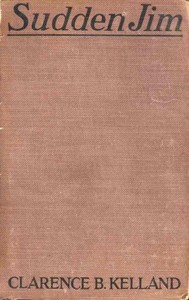
Sudden Jim — Reading Notes
(0 User reviews)
515
Project Gutenberg
2013
Not confirmed
Children of the rich -- Fiction; Political fiction; Michigan -- Fiction; Industrialists -- Fiction
Readers of public-domain and historical texts
Project Gutenberg digital edition
en
Edition facts
Words
70,243
Reading time
306 min
Text sections
9
For Sudden Jim — Reading Notes, the stored edition analysis reports 70,243 words, 5 hr 6 min estimated reading time, and 9 detected text sections.
The text analysis averages about 11.9 words per sentence, while the detected sections provide another way to judge how the source is divided.
Project Gutenberg metadata also associates the work with “Children of the rich -- Fiction,” connecting these edition facts with the source record’s subject description.
Source:
Project Gutenberg record #44079
An editorial note examining how Clarence Budington Kelland's 'Sudden Jim' uses movement between scenes and recurring imagery of clothespins, signatures, and financial risk to structure a story about a young man earning a descriptive name in Diversity, Michigan.
Read the complete public-domain text at its original source.
Read on Project GutenbergClarence Budington Kelland opens Sudden Jim with a playful insistence on the artificial origin of clothespins—they are not threshed like beans but manufactured. This seemingly trivial fact anchors the novel’s central concern: that identity, like a clothespin, is made, not grown. The narrative moves from Clothespin Jimmy’s library, lined with ninety feet of idle books, to the train platform where Jim first sees Marie Ducharme as a statue of discontent. These shifts between domestic interiors and public thresholds establish a pattern of movement that mirrors Jim’s struggle to earn a name that sticks.
Clothespins as Structural Anchors
The clothespin is not merely a product but a metaphor for the novel’s structure. Kelland returns to it in the opening chapter, where Clothespin Jimmy explains that his nickname “tells the whole story” and that his son, called merely Jim, does not “stick up above the herd.” The object recurs as a touchstone for value: a clothespin mill in Diversity, Michigan, becomes the site of conflict. The narrative itself is built like a machine—each scene a cog that advances Jim’s quest for a descriptive epithet. The clothespin’s manufactured nature underscores the theme that reputation is constructed through deliberate action, not inheritance.
Signatures and the Weight of a Name
Kelland uses signatures as markers of character. Clothespin Jimmy’s illegible scrawl is “honored by the bank,” suggesting that trust outweighs legibility. Later, Jim’s business dealings hinge on the moral weight of his name: a bank president states he would “rather lend a known honorable man money on doubtful security than to venture a loan to a dubious man on Government bonds.” The signature becomes a recurring image of personal credit. Jim’s journey is to transform his name from a generic label into a signature that carries meaning—a process the novel tracks through financial transactions and personal encounters.
Movement Between Interior and Threshold
The novel’s scenes frequently shift from enclosed spaces—a library, a bank, a train car—to open thresholds like the train platform. Jim’s first sight of Marie Ducharme occurs at this liminal space: she stands “motionless, a statue” gazing after a departing train. This movement between interior and exterior mirrors Jim’s own transition from passive son to active agent. The train platform recurs as a site of arrival and departure, hope and disappointment. Kelland uses these transitions to punctuate Jim’s emotional shifts, from elation after securing a loan to the return of doubt as he rides home.
Financial Risk as Narrative Engine
Kelland structures the plot around escalating financial stakes. Jim borrows thirty thousand dollars from the Diversity Bank and twenty-five thousand more from the City Bank, each loan a scene of moral and material risk. The demand note of thirty thousand dollars “reared itself as a threat, assumed the guise of a poised bird of prey.” This personification of debt turns finance into a tangible antagonist. The narrative moves from Jim’s initial faith in business virtue to a growing awareness of vulnerability. His hatred for Michael Moran, introduced as a rival, is intertwined with financial competition and personal jealousy, making money a driver of both plot and emotion.
Readers attentive to Kelland’s use of recurring objects and scene transitions will find a novel that earns its title through incremental, concrete steps. The clothespin, the signature, and the loan document each carry weight beyond their literal function. As Jim moves from library to platform to bank, the story builds a world where a name is something to be manufactured, not given.
Sometimes I think about how Sudden Jim keeps circling back to those clothespins, small and ordinary, tying scenes together without anyone noticing until the end. It reminded me of another quiet book, The Judgment Books: A Story — Context and Discussion, where the weight of names and ledgers felt just as homely, just as inevitable, like a porch light left on for someone coming in from the cold.
There are no reviews for this eBook.
There are no comments for this eBook.
Reader reflection
What was your reading experience?
Capture what you thought, learned, and would like to remember.
Your progress
0
/
10
2
How much did you enjoy the reading experience?
3
Is this a title you would suggest to others?
4
Did the language feel accessible?
5
How strong was your personal connection to the text?
6
Do you expect to return to this book?
7
How useful were the ideas in this book?
8
How clearly were the main ideas presented?
9
Which lesson or insight stayed with you?
10