1

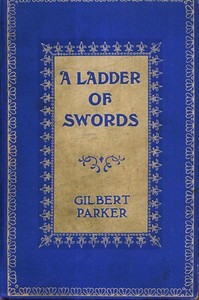
A Ladder of Swords: A Tale of Love, Laughter and Tears — Reading Notes
(0 User reviews)
119
Project Gutenberg
2012
Not confirmed
Great Britain -- History -- Elizabeth, 1558-1603 -- Fiction; Huguenots -- Fiction; Jersey (Channel Islands) -- Fiction
Readers of public-domain and historical texts
Project Gutenberg digital edition
en
Edition facts
Words
54,977
Reading time
240 min
Text sections
6
This digital edition of A Ladder of Swords: A Tale of Love, Laughter and Tears — Reading Notes is described by source-level measurements including 54,977 words, 4 hr estimated reading time, and 6 detected text sections.
The text analysis averages about 20.1 words per sentence, while the detected sections provide another way to judge how the source is divided.
Project Gutenberg metadata also associates the work with “Great Britain -- History -- Elizabeth, 1558-1603 -- Fiction,” connecting these edition facts with the source record’s subject description.
Source:
Project Gutenberg record #41303
Gilbert Parker's novel, set in Elizabethan Jersey and court, weaves a tale of love and conflict around Michel de la Forêt and Angèle Claude Aubert. The narrative moves between island and court, using recurring images of swords, climbing, and the sea, with a structure that juxtaposes intimate scenes against political intrigue.
Read the complete public-domain text at its original source.
Read on Project GutenbergThe novel opens not with a scene but with a record: the register of the Walloon church in Southampton, where the marriage of Michel de la Forêt and Angèle Claude Aubert is noted. Parker then describes how he, as narrator, discovered this and other 'human documents'—including a tear-stained letter—that inspired his tale. This framing device establishes the story as one reconstructed from fragments, a 'ladder of swords' built from historical traces.
The title itself, drawn from a woman's letter quoted on the title page, signals a central image: climbing a ladder of swords. This metaphor recurs throughout, as characters navigate perilous social and political heights. The narrative structure alternates between the island of Jersey and the English court, each setting carrying its own atmosphere and stakes.
From Island to Court: A Divided World
The story moves between two sharply contrasted settings: the insular, Norman-influenced Jersey and the glittering, treacherous court of Queen Elizabeth. The island is evoked through details like the Walloon church register and the seigneur of Rozel, while the court appears in scenes of duels and fêtes. This geographical split is not merely backdrop but structural: the narrative shifts between these poles, each with its own rhythm and moral climate.
In the excerpt, the duel between Lemprière and Leicester is set beside the Thames, with the morning mists over Kent and Essex, the smell of ripening fruit, and the crash through tigerlilies. This sensory richness contrasts with the court's artificiality. The island, by implication, is a place of older, more direct codes—Lemprière is a 'primitive Norman'—while the court is a maze of favor and intrigue. The movement between these worlds drives the plot and shapes the characters' choices.
The Duel as Moral Mirror
The duel between Lemprière and Leicester is rendered in precise, almost leisurely detail, yet it serves as a sharp character study. Lemprière, described as 'a vast epicurean, a consummate egotist,' feels no agitation; he swaggers 'as though marching to a marriage.' Leicester, by contrast, is driven by arrogance and a 'will for murder,' believing fate is always on his side. The morning itself—with its thrushes, ploughmen, and poachers—is indifferent to their conflict.
Parker uses the duel to expose the two men's moral blindness. Lemprière 'loved the things that his eyes saw' without questioning their meaning; Leicester feels only 'the garish and the splendid.' Neither grasps the 'million deep teachings trembling round him.' The duel is not just a plot event but a lens through which the novel examines different modes of egoism and self-deception, a pattern that likely extends to other characters.
Recurring Images: Swords, Climbing, and the Sea
The title image—a ladder of swords—permeates the novel's language and structure. The woman's letter quoted on the title page speaks of climbing such a ladder 'for many years,' suggesting a life of painful ascent. In the duel scene, swords are literal, but the image also resonates metaphorically: characters climb social ladders, navigate dangerous favor, and face moral tests that cut like blades.
The sea appears as another recurring motif. The frontispiece caption, 'She scanned the sea for a sail,' and the island setting of Jersey place the ocean as a boundary and a horizon. The sea separates the island from the court, but also connects them; it is a space of waiting, arrival, and departure. These images—swords, climbing, the sea—are woven into the narrative's fabric, giving it a cohesive symbolic texture that rewards close attention.
Voice and Narrative Framing
Parker's narrator is a self-conscious presence, explicitly shaping the story from discovered documents. He describes finding the marriage record and later 'human documents,' including a letter that 'was tear-stained, faded, beautifully written in old French.' This framing gives the tale an air of authenticity and melancholy, as if the narrator is piecing together a true but sorrowful history.
The narrative voice is ornate and slightly archaic, with a tendency toward moral commentary. Descriptions are lush—'the stinging sweetness of the morning,' 'the long whisper of enlivened nature'—but also analytical, as when Parker dissects Leicester's character. This voice creates a distance between reader and events, inviting reflection rather than immersion. The framing also allows Parker to acknowledge anachronisms (as he does in a note) while claiming emotional truth. The result is a novel that feels both historical and personal, a reconstruction of lives from fragments.
Readers attentive to the novel's structure will notice how Parker uses juxtaposition—between island and court, between characters' inner states and their actions—to build meaning. The recurring images of swords and climbing are not decorative but structural, linking scenes across the narrative. The framing device of discovered documents invites a reflective reading, one that considers how stories are assembled from traces. This is a novel that rewards patience with its details and its deliberate pacing.
That rainy afternoon, the sword-ladder’s clang faded into the murmur of the sea off Jersey, and I found myself thinking less of Michel’s duels than of his quiet, rain-soaked longing. The book underneath on the sofa caught my eye—The city of beautiful nonsense — Text and Context—and its title seemed to answer Parker’s storm with a softer, more forgiving kind of ache. Some afternoons simply rearrange themselves.
There are no reviews for this eBook.
There are no comments for this eBook.
Reader reflection
What was your reading experience?
Capture what you thought, learned, and would like to remember.
Your progress
0
/
10
2
How did the book work for you overall?
3
Is this a title you would suggest to others?
4
How much effort did this book require?
5
Which element worked best for you?
6
Could you see yourself revisiting this book?
7
Did the book give you something worth debating?
8
How much did the book move you?
9
What is the main idea you are taking away?
10