1

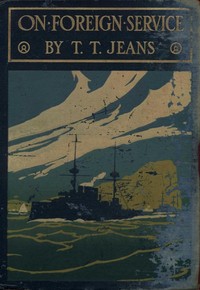
On Foreign Service; Or, The Santa Cruz Revolution — A Reader’s Guide
(0 User reviews)
291
Project Gutenberg
2014
Not confirmed
South America -- Fiction; Seafaring life -- Fiction; Great Britain. Royal Navy -- Fiction
Readers of public-domain and historical texts
Project Gutenberg digital edition
en
Edition facts
Words
95,560
Reading time
416 min
Text sections
12
For On Foreign Service; Or, The Santa Cruz Revolution — A Reader’s Guide, the stored edition analysis reports 95,560 words, 6 hr 56 min estimated reading time, and 12 detected text sections.
The text analysis averages about 22.5 words per sentence, while the detected sections provide another way to judge how the source is divided.
Project Gutenberg metadata also associates the work with “South America -- Fiction,” connecting these edition facts with the source record’s subject description.
Source:
Project Gutenberg record #45914
A naval sub-lieutenant's first-person account of revolution in a South American republic, blending Royal Navy duty with onshore adventures, marked by colloquial narration, vivid coastal setting, and precise military detail.
Read the complete public-domain text at its original source.
Read on Project GutenbergThe story opens with Sub-Lieutenant William Wilson, R.N., narrating in a breezy, first-person voice that immediately establishes his youth and inexperience. He describes how he and his friend Ginger Hood, now sub-lieutenants themselves, struggle to manage their gun-rooms aboard the armoured cruisers Hector and Hercules. The tone is colloquial and self-deprecating: Wilson admits they felt “jolly much like fish out of water.” This informal register, punctuated by naval slang and wry humour, persists throughout the excerpts, giving the narrative a conversational immediacy.
A Narrator’s Voice Shaped by the Gun-Room
Wilson’s narration is marked by a distinctive blend of youthful bravado and self-awareness. He freely admits his shortcomings—such as being “a rotten shot with a revolver”—and uses colloquial phrases like “you may bet I jumped at the offer.” The dialogue, too, reflects the easy camaraderie of naval officers: Gerald’s greeting, “Hello, Billums! Got my bag all right?” feels natural and unforced. This voice is not merely decorative; it shapes how the reader perceives events. When Wilson fires at the ex-policeman and misses, his frank admission of poor marksmanship undercuts any heroic pretension, grounding the adventure in a recognizably human fallibility.
Setting as Active Participant: The Coast Road and the Forest
The physical environment in the excerpts is rendered with specific, sensory detail that does more than provide backdrop. The road to Marina is described as “in such a terrible state of holes and ruts, crumbling down here and there on the beach side, and overgrown with bushes on the forest side.” Wilson observes that “the sea and the forest between them would swallow it up pretty soon.” This personification of landscape—the sea and forest conspiring to reclaim the road—gives the setting a dynamic, almost threatening quality. Later, the Casino appears as “a gaudy-looking kind of place, nearly all windows, with a flat roof, verandahs and balconies all round it,” its flag “half-hidden by a huge black and green flag.” These details are not merely picturesque; they establish a sense of place that is both exotic and precarious.
Recurring Motifs: The Ex-Policeman and the Threat of Pursuit
A figure identified only as “that ex-policeman” appears twice in the excerpts, each time triggering a sudden, violent reaction from Wilson. The first mention is in the chapter list; the second occurs when Wilson spots him “squatting by the side of a low garden wall” and immediately jumps from the carriage to pursue him. The man bears a scar on his forehead, and Wilson fires at him twice, missing both times. This recurring motif—a shadowy antagonist who evades capture—suggests a personal vendetta or unresolved threat. The author uses the ex-policeman to inject tension into otherwise straightforward travel sequences, hinting at dangers that lurk beyond the main revolutionary action.
Naval Precision in a Land War Context
The author, a Staff Surgeon in the Royal Navy, brings a professional’s eye to military details. The preface states that the “naval portion of the story may be taken to give an accurate description of the incidents narrated,” and the excerpts bear this out. Wilson’s account of the road to Marina includes observations of “wounded men limping wearily towards San Fernando” and “horrid-looking crows, something like vultures, hopping about round” dead soldiers. The description of the Casino’s flag—a “huge black and green flag”—hints at revolutionary symbolism. These details are delivered without melodrama, in the same matter-of-fact tone Wilson uses for his own blunders. The effect is a narrative that treats naval and land operations as equally concrete, observable phenomena.
Readers should attend to the interplay between Wilson’s informal narration and the precise, often grim details he reports. The colloquial voice can make violence and danger seem casual, but the author’s professional background ensures that military and geographical specifics are rendered with care. The excerpts offer only a partial view of the revolution; the full novel likely expands on the naval operations hinted at in the chapter titles. Approach the text as a hybrid: part adventure tale, part technical account of British naval power ashore.
Years ago, I shelved that Santa Cruz tale—the sub-lieutenant’s chuckling aside about maps being lies—and I thought of another quiet volume, The Lost Cabin Mine — Background and Themes, where a missing claim is less a treasure than a longing. Both books know how a place you can’t quite reach stays with you longest.
There are no reviews for this eBook.
There are no comments for this eBook.
Reader reflection
Before you leave, reflect on the book
Use these questions to collect your thoughts before moving on.
Your progress
0
/
10
2
Did this book hold your interest?
3
Would you recommend this book to another reader?
4
How easy was the book to follow?
5
Did the book offer a fresh perspective?
6
How understandable was the text?
7
Is this a title worth rereading?
8
Did this book create an emotional response?
9
What changed or sharpened your thinking?
10