
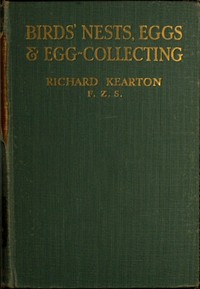
Birds' Nests, Eggs and Egg-Collecting by Richard Kearton
Published in 1890, Birds' Nests, Eggs and Egg-Collecting is exactly what its title promises: a practical field guide. Richard Kearton, a pioneering wildlife photographer and naturalist, wrote it to share his extensive knowledge. The book is structured as a manual, walking the reader through the seasons, detailing where and how to find the nests of British birds, how to identify their eggs by color and markings, and the proper techniques for collecting and preserving them.
The Story
There's no traditional plot, but there is a narrative of a year in the British countryside. Kearton acts as your guide, starting in early spring when the first birds begin to build. He describes hiding in hedges to watch a wren, or carefully approaching a meadow pipit's nest in the grass. Each chapter feels like a walk with a deeply knowledgeable friend who points out secrets you'd never notice. He shares anecdotes of difficult finds and close calls, making the 'hunt' feel adventurous. The heart of the book is this detailed, intimate knowledge of bird behavior and habitat, all aimed at helping the collector succeed.
Why You Should Read It
This book is a paradox, and that's what makes it so interesting. Kearton's writing is filled with clear admiration for birds. He warns against disturbing nests unnecessarily and advocates for conservation in his own way. Yet, his central purpose is to facilitate egg-collecting, or 'oology.' Reading it today creates a strange tension. You're learning from a true expert, but the core activity feels alien and troubling. It offers an unfiltered look at Victorian-era naturalism, where loving nature often meant possessing a piece of it. It’s not an endorsement of the practice, but a primary source that helps us understand how far our environmental ethics have evolved.
Final Verdict
This isn't a casual bedtime read. It's perfect for history lovers, birdwatchers curious about their hobby's past, or anyone interested in the changing relationship between humans and nature. It's a specialist's book that has become a historical artifact. You read it not for current advice, but for insight. You come away with a profound appreciation for Kearton's observational skills and a clearer sense of how the simple, passionate act of bird-watching transformed from collecting eggs to protecting them.
This masterpiece is free from copyright limitations. You do not need permission to reproduce this work.
Donald Wilson
5 months agoIf you're tired of surface-level information, the footnotes provide extra depth for those who want to dig deeper. A mandatory read for anyone in this industry.
George Lee
1 year agoThe information is current and very relevant to today's needs.
Susan Perez
9 months agoGreat read!
Sarah Ramirez
7 months agoI have to admit, the clarity of the writing makes this accessible. Don't hesitate to start reading.




Matthew Moore
1 year agoInitially, I was looking for a specific answer, but the author doesn't just scratch the surface but goes into meaningful detail. Definitely a five-star contribution to the field.