
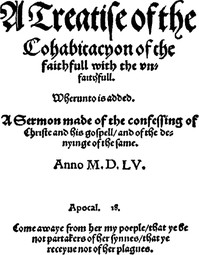
A treatise of the cohabitacyon of the faithfull with the vnfaithfull. by Vermigli et al.
Let's set the scene: It's the 1500s, and Europe is cracking apart along religious lines. The Protestant Reformation is in full swing, and for people like Heinrich Bullinger, a leading Swiss reformer, this isn't just about doctrine—it's about building a new, pure community of believers from the ground up. But life is messy. What happens when a devout Protestant man wants to marry a Catholic woman? Or when a believer's closest friend or business partner belongs to the 'wrong' church? This treatise is Bullinger's direct, forceful answer to that problem.
The Story
There isn't a traditional plot with characters. Instead, the 'story' is the argument itself, built on a mountain of biblical quotes. Bullinger's position is stark and uncompromising: faithful believers must not marry or live in close partnership with the unfaithful. He walks through the Old Testament stories of Ezra and Nehemiah, who commanded Israelites to divorce their foreign wives, and New Testament warnings about being 'unequally yoked.' For Bullinger, cohabitation isn't just a personal risk; it's a contagion that weakens the entire reformed church, tempting believers back into error and idolatry. The tension in the book comes from watching him apply this rigid biblical logic to the tangled, intimate realities of daily life.
Why You Should Read It
This book fascinated me because it shines a light on the human cost of big ideas. We often study the Reformation as a clash of popes and princes, but here you see how those clashes happened over the dinner table. Bullinger isn't writing abstract theory; he's trying to solve a pastoral crisis. His absolute certainty is both impressive and chilling. Reading his arguments, you feel the immense pressure ordinary people were under to align every single part of their lives—especially their closest relationships—with their new religious identity. It makes you think about the lines we draw today between community and personal freedom, between conviction and compassion.
Final Verdict
This isn't a beach read. It's a challenging, primary-source dive into a mindset that feels very foreign now. It's perfect for history buffs who want to move beyond dates and battles to understand the social engineering of the Reformation. It's also great for anyone interested in the history of marriage, religious conflict, or how communities define themselves against outsiders. If you enjoy seeing how people in the past grappled with impossible personal dilemmas under the weight of ideology, you'll find this short treatise surprisingly gripping.
This historical work is free of copyright protections. Use this text in your own projects freely.
Patricia Allen
1 year agoMy professor recommended this, and I see why.








Elizabeth White
1 year agoThe information is current and very relevant to today's needs.